Argentina National Flower: The Beautiful Ceibo Story
Updated: November 4, 2026
5
Discover the Argentina National Flower, the beautiful ceibo, a stunning red-flowering tree with a fascinating story rooted in Argentine culture and folklore. From the legendary tale of Anahí to its deep symbolism of courage, resilience, and natural beauty, this flower holds a special place in the country’s identity. Keep reading to explore its history, meaning, interesting facts, and why this remarkable bloom became Argentina’s beloved national symbol!
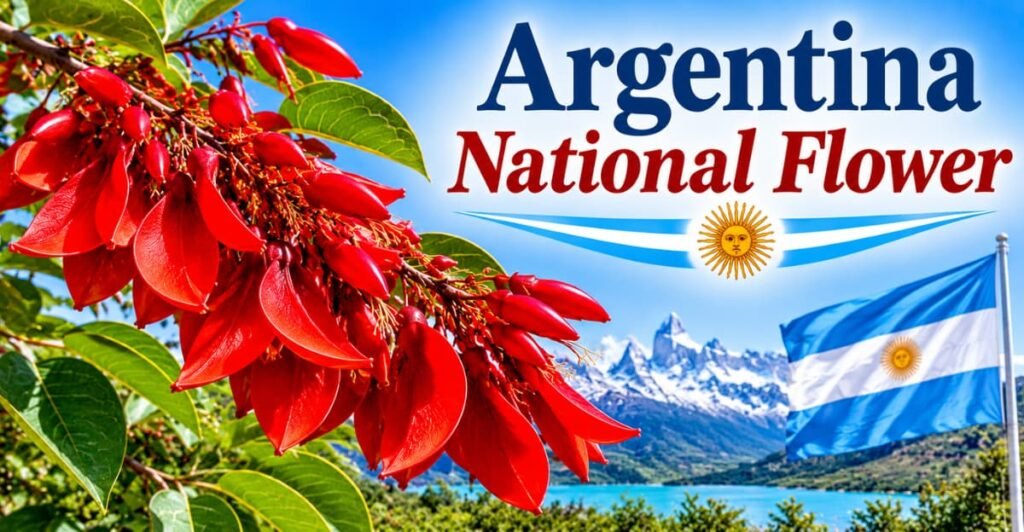
Table of Contents
What Is the National Flower of Argentina?
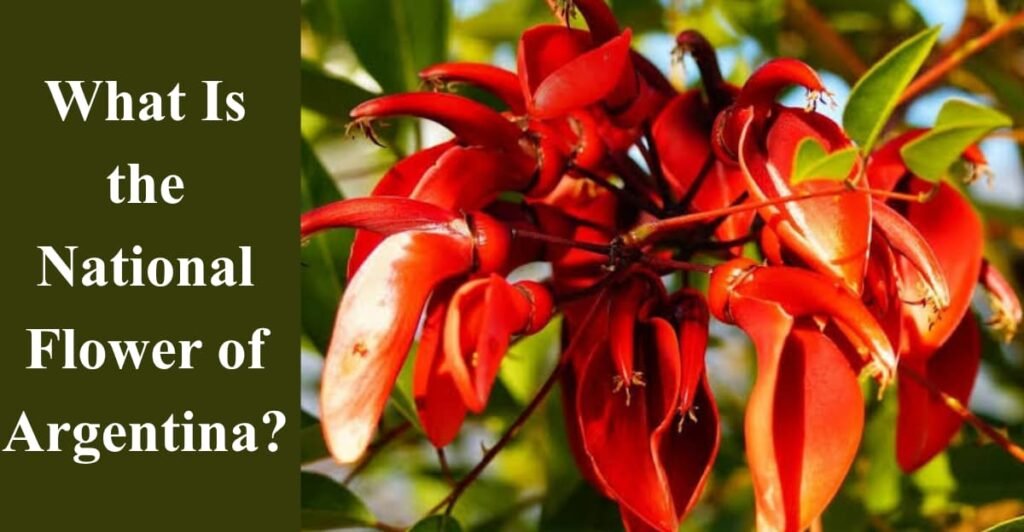
The Argentina National Flower, known as the ceibo (Erythrina crista-galli), is a beautiful flowering tree belonging to the Fabaceae family and native to South America. It naturally grows in moist areas, including riverbanks, wetlands, and marshes, where its vivid red flowers and coral-red flowers make it easily recognizable among native Argentine flora.
On December 22, 1942, the ceibo received official recognition through Decree No. 13,847, becoming Argentina’s official national flower. Its native presence, cultural connections, and place in Argentine folklore established it as a powerful national symbol, representing the country’s natural heritage, cultural heritage, botanical heritage, floral identity, and national pride; today, this ornamental tree also brightens parks, gardens, and public spaces.
From my botanical perspective, the ceibo is especially fascinating because its striking flowers combine natural beauty with a meaningful connection to Argentina’s history and heritage.
Ceibo Names in Argentina and Around South America
The ceibo, also called seibo, is known by several regional names across South America. In Spanish-speaking countries, it is commonly called ceibo, while Portuguese-speaking regions use names such as corticeira and bucaré; its English names include cockspur coral tree, cock’s comb, common coral tree, and cry-baby tree.
These common names, Spanish names, and Portuguese names all refer to the same South American plant, scientifically identified as Erythrina crista-galli. Its botanical identity, species identification, and regional terminology reflect different linguistic variations, country names, and language differences, while names like cock’s comb describe its red flowers, distinctive flower shape, and distinctive blooms; it is also recognized as the coral tree, a flowering tree, native tree, and Argentina national flower.
In my experience with botanical naming, learning a plant’s different regional names makes it easier to understand its cultural importance and recognize it across countries.
Why Was Ceibo Chosen as Argentina’s National Flower?
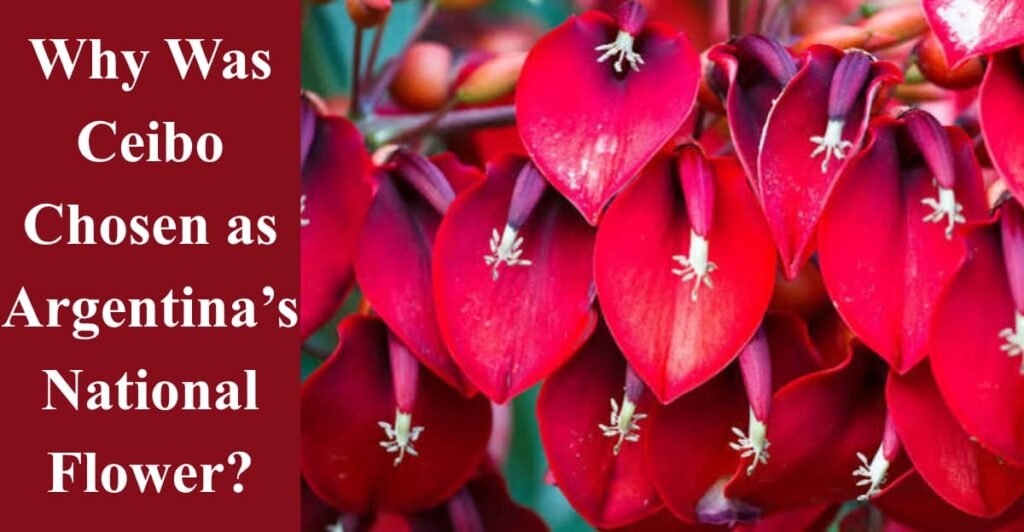
The ceibo selection as Argentina’s national flower followed a thoughtful process lasting several years. Although the magnolia was initially considered for its stunning appearance, it was rejected because it was a non-native plant, making the ceibo tree (Erythrina crista-galli) a more suitable native species representing Argentina’s natural heritage and Argentine landscape.
Public surveys involving 20,000 participants showed overwhelming support for the ceibo because of its widespread presence, Indigenous legends, poetry, and folklore. A special commission recognized its cultural significance, leading to its official declaration on December 22, 1942, under Decree No. 13,847, establishing it as a national floral emblem and symbol of national identity, botanical heritage, national pride, and Argentine identity.
In my experience studying native flowers, the ceibo is a meaningful choice because it reflects Argentina’s natural environment and cultural roots.
How the Ceibo Became a Symbol of Resistance
A traditional Guaraní legend tells the story of Anahí, a young Indigenous woman who lived near the Paraná River and was admired for her beautiful singing. During the Spanish invasion, she was captured, escaped, and later recaptured after killing her guard, leading to a severe punishment.
According to this legendary story, Anahí was tied to a tree and condemned to die in a fire. As the flames rose, she underwent a magical transformation into a ceibo tree with green leaves and velvety red flowers, discovered by the soldiers the next morning. Preserved through Argentine folklore, Guaraní culture, and traditional storytelling, the legend connects Argentina’s national flower with courage, resistance, freedom, endurance, bravery, strength, perseverance, sacrifice, and resilience.
From my perspective, this folklore makes the ceibo especially meaningful because its flowers represent the enduring spirit of courage and freedom.
What Does the Ceibo Flower Symbolize in Argentina?
The ceibo flower, with its vivid red flowers and bright blooms, carries deep cultural meaning in Argentina. Inspired by the Anahí legend and traditional legend, it symbolizes courage, strength, resilience, perseverance, and resistance, reflecting the ability to remain standing firm through suffering and hardship.
Beyond its flower symbolism and symbolic meaning, the ceibo represents memory, national identity, and national pride. Its presence in Argentine poetry, music, legends, and folklore connects cultural traditions, traditional stories, and Argentine heritage, making this national flower an important national symbol and part of the country’s natural heritage, botanical heritage, and Argentine culture.
In my experience exploring native flowers, the ceibo stands out because its red blossoms beautifully connect natural beauty with cultural identity, historical memory, and endurance across generations.
Ceibo in Argentine Public Life
Argentina celebrates National Flower Day on November 22, highlighting the ceibo through a national celebration involving schools and cultural institutions. Educational activities, exhibitions, drawings, and reading materials introduce children to the Argentina National Flower, encouraging interest in Argentina flowers, native plants, and native botanical heritage.
The flower also appears in Argentine cultural materials, including illustrations, literary references, folk traditions, and educational publications. These public celebrations, community activities, and cultural events promote botanical education, environmental awareness, cultural awareness, and public awareness, keeping the ceibo connected with everyday cultural life, native plant heritage, flower recognition, national identity, cultural representation, botanical traditions, educational resources, native flora, floral heritage, and Argentine traditions.
From my experience with botanical topics, introducing native flowers through school activities and public exhibitions is an effective way to build appreciation for local plant heritage.
What Does the Ceibo Tree Look Like?
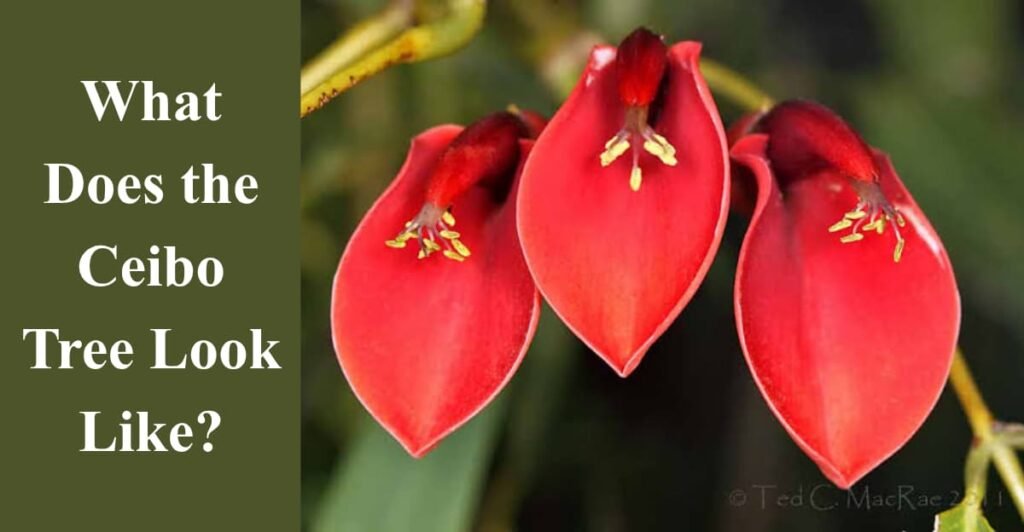
The ceibo tree (Erythrina crista-galli), Argentina’s national flower, is a striking flowering tree that can reach 15 meters tall (50 feet). It develops a broad crown, spreading crown, stout trunk, sometimes flared base, and rough gray-brown bark, while its outward-growing branches may carry sharp thorns that create a distinctive appearance.
Its trifoliate leaves, or three-part leaves, consist of green leaflets that form a full canopy during the growing season, offering dappled shade beneath its broad canopy. During the blooming period, flower clusters of bright red flowers appear along the branches, contrasting beautifully with the green foliage and creating strong colors and red blooms.
When describing flowering trees, I pay particular attention to their canopy, foliage, and seasonal blooms because these features make botanical identification easier and help readers appreciate their natural beauty.
Where Does the Ceibo Grow Naturally?
The ceibo (Erythrina crista-galli), Argentina’s national flower, naturally grows in moist environments across South America. It thrives along riverbanks, streams, wetlands, marshes, and low-lying areas with seasonal flooding, especially near the Paraná River, Río de la Plata, and throughout the Litoral region.
Its native range includes Argentina, Uruguay, Paraguay, Brazil, and eastern Bolivia. This moisture-loving tree grows well in warm climates and forms part of gallery forests, wetland vegetation, and riverside habitats, including the Pre-Delta and Paraná River Delta.
From a botanical perspective, the ceibo is a valuable part of South American biodiversity, supporting native plant communities across river ecosystems and Argentine wetlands.
Ceibo Flowers, Pollination, and Fruit
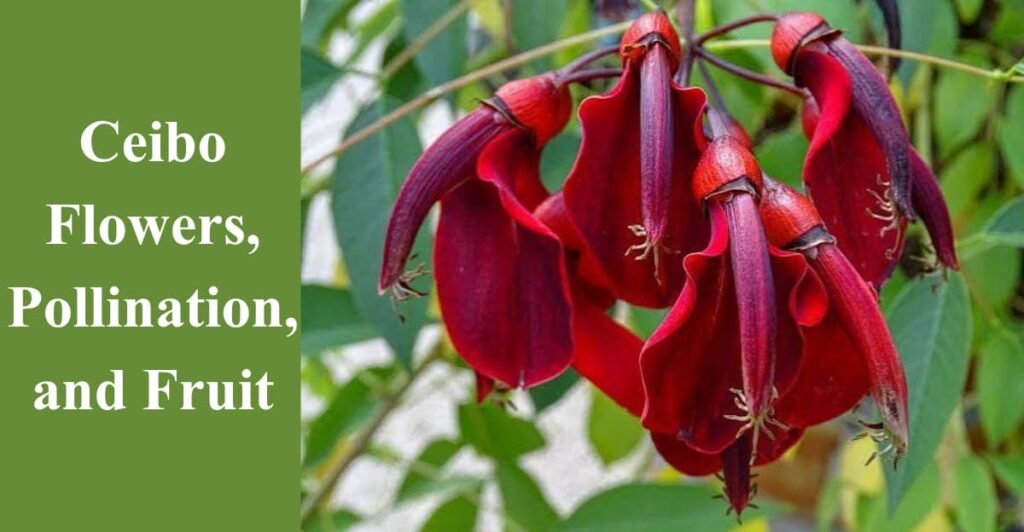
The ceibo flower has vivid red petals and scarlet petals arranged in attractive flower clusters along its branches. Its unusual flower structure attracts hummingbirds, which visit for nectar and help with bird pollination, pollen transfer, and cross-pollination. Bees, honeybees, and other flower visitors also support this process.
After pollination, the Argentina National Flower develops elongated pods and curved seed pods containing several seeds. When mature, the pods open and release seeds that spread through nearby wetlands and moist habitats, sometimes with the help of water dispersal.
The ceibo’s flowering season and seed production show how native trees support wildlife interaction, natural reproduction, and plant propagation in wetland environments.
The Ceibo’s Role in Argentina’s Wetland Ecosystems
The ceibo tree, Argentina’s national flower, grows in riverside forests and wetland plant communities near waterways such as the Paraná River. Alongside native species like willows and river alders, its branches and foliage provide shelter for birds, insects, and small organisms.
Its fallen leaves decompose in the water, becoming a food resource for aquatic invertebrates such as insects, crustaceans, worms, and mollusks. This leaf decomposition supports nutrient cycling and strengthens the wetland food web.
The ceibo contributes to wetland biodiversity by providing habitat and organic matter that help maintain healthy river ecosystems.
Wildlife and Ceibo Flower
The bright ceibo flowers attract hummingbirds, which visit for nectar and help with bird pollination. Bees, honeybees, and carpenter bees also visit the blossoms, making the tree an important source of floral resources for wildlife in Argentina and Uruguay.
A pollination study recorded flower visits by four hummingbird species, highlighting the relationship between ceibo populations and local pollinators. Its fallen leaves also support aquatic life, including chironomid larvae, crustaceans, worms, and mollusks in river habitats.
These interactions show how the Argentina National Flower supports biodiversity above and below the water through pollination and leaf decomposition.
Argentina Flower Uses
The ceibo is widely valued as an ornamental tree in Argentina, where its showy flowers and bright colors enhance parks, plazas, gardens, streets, and public spaces. Its attractive appearance also makes it a popular choice for landscaping and urban greenery.
Ceibo wood has been used in local crafts and traditional objects, including the bombo legüero, an Argentine folk drum. Some folk traditions also mention its bark and flowers for natural dyes and traditional remedies, although medicinal applications should not be treated as proven without scientific evidence.
Beyond its practical uses, the ceibo remains an important part of Argentine culture, traditional craftsmanship, and natural heritage.
How to Grow a Ceibo Tree
To grow Erythrina crista-galli, choose a sunny location with fertile, well-draining soil that retains some moisture. The tree needs regular watering, especially while young, but avoid waterlogged soil to encourage healthy root establishment.
You can propagate a ceibo through seeds or softwood and semi-hardwood cuttings. For seed propagation, soak seeds in warm water before sowing to support germination, and give the young plant enough space to develop its broad crown.
Prune dead, damaged, or crossing branches to maintain a balanced canopy. Since this native flowering tree is sensitive to severe cold and frost, provide winter protection or choose a sheltered planting site in cooler regions.
National Flower vs National Tree of Argentina
Argentina has two distinct botanical symbols: the ceibo (Erythrina crista-galli), its national flower, and the quebracho colorado chaqueño (Schinopsis balansae), its national forest tree. The ceibo is known for its beautiful red blooms and wetland habitats, while quebracho is valued for its strong, resilient wood and connection to Argentina’s northern forests.
The quebracho received official recognition on August 21, 1956, under Decree No. 15,190. Together, these native trees represent different parts of Argentine flora, from the wetlands and riverbanks of the Litoral region to the forests of the Chaco area.
The ceibo reflects Argentina’s floral heritage, while quebracho represents its forest legacy. Both contribute to the country’s natural heritage, botanical identity, and national pride.
Important Flowers of Argentina
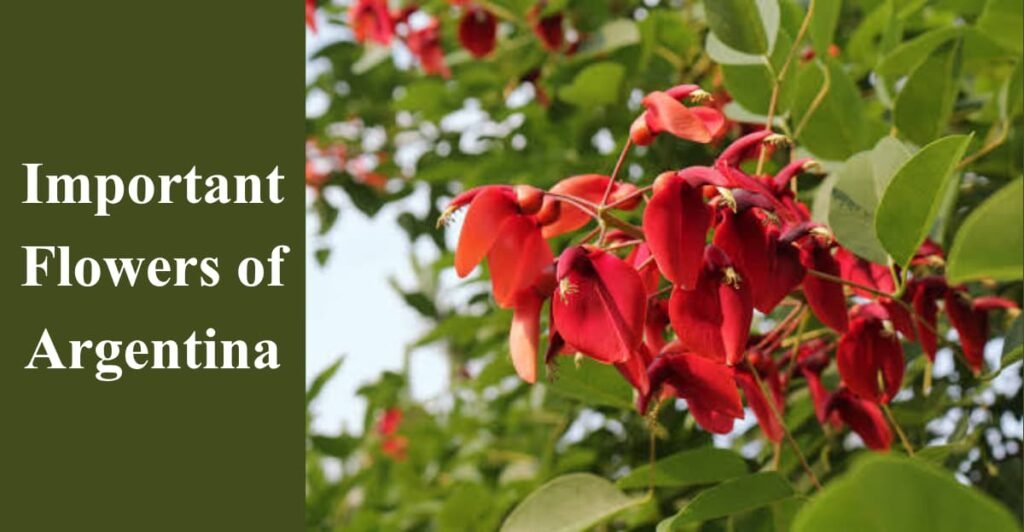
Argentina has a rich variety of native flowers that grow across its mountains, forests, grasslands, and dry regions. Some beautiful examples include:
- Notro (Embothrium coccineum): A small tree native to Andean forests, known for its bright red flower clusters.
- Amancay (Alstroemeria aurea): A native Andean plant with yellow and orange flowers that bloom in mountain forests and open areas.
- Chilco (Fuchsia magellanica): Found in moist areas of southern Argentina, this plant produces hanging red, purple, and pink flowers.
- Calafate (Berberis microphylla): A Patagonian shrub with small yellow spring flowers and dark blue, edible berries.
- Espinillo (Vachellia caven): A native tree or shrub with fragrant yellow flower clusters, common in central and northern Argentina.
- Jarilla (Larrea spp.): A hardy shrub of the dry Monte region, adapted to hot conditions and limited rainfall.
Along with the ceibo (Erythrina crista-galli), these plants represent Argentina’s native floral heritage and botanical diversity.
Wild Animals in Argentina
Argentina is home to diverse wildlife found in the Andes, Patagonian forests, grasslands, wetlands, and northern forests. Some notable native animals include:
- Puma: An adaptable wild cat that lives in mountains, forests, grasslands, and dry regions.
- Guanaco: A wild camelid related to the llama, commonly found in Patagonia and adapted to harsh open landscapes.
- Vicuña: A high-Andean animal famous for its fine wool and ability to survive at high elevations.
- Yaguareté (Jaguar): A large native cat found in northern Argentina and considered an important conservation priority.
- Andean Condor: A huge soaring bird often seen flying above the Andes and surrounding mountain areas.
- Capybara: A semi-aquatic rodent that lives near rivers, lagoons, and wetlands, especially in northeastern Argentina.
Protecting these animals and their natural habitats is essential for Argentina’s biodiversity and wildlife conservation.
Interesting facts about Argentina National Flower
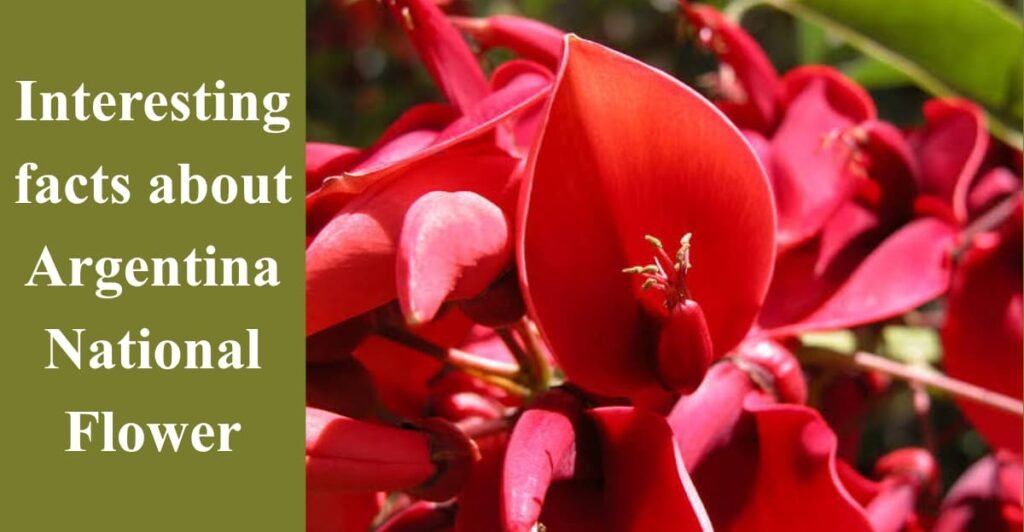
The ceibo (Erythrina crista-galli) has several fascinating botanical and cultural features:
- Meaning of its scientific name: Erythrina comes from the Greek word erythros, meaning red, while crista-galli refers to a rooster’s crest, describing the flower’s distinctive shape.
- Part of the bean family: Ceibo belongs to the Fabaceae family, which also includes beans and peas.
- Native to South America: It naturally grows in Argentina, Uruguay, Paraguay, and Brazil.
- Shared national flower: Ceibo is also the national flower of Uruguay, connecting the two neighboring countries through a shared botanical symbol.
- Lightweight wood: Its soft, porous wood has been used to make lightweight objects and traditional crafts.
- Traditional musical connection: Ceibo wood has been associated with the bombo legüero, a traditional drum used in Argentine folk music.
- Wetland habitat: The tree commonly grows near rivers and waterways, forming part of natural riverside and gallery forests.
These facts highlight the ceibo’s botanical significance and its lasting connection to Argentina’s natural heritage and cultural identity.
Conclusion
The Argentina National Flower, the beautiful ceibo (Erythrina crista-galli), represents courage, resilience, and the country’s rich cultural heritage. From the legendary story of Anahí to its vital role in wetland ecosystems, this stunning red flower holds a special place in Argentine identity. Exploring its history, symbolism, and growing habits reveals why the ceibo remains one of Argentina’s most treasured natural symbols.
Frequently Asked Questions
1. What is the national flower of Argentina?
The ceibo (Erythrina crista-galli), a tree with striking red flowers, is Argentina’s official national flower. It was declared on December 22, 1942.
2. What does the ceibo flower symbolize?
The ceibo symbolizes courage, strength, resilience, and resistance. Its meaning is closely connected to the traditional legend of Anahí.
3. Where does the ceibo tree grow naturally?
The ceibo grows naturally in Argentina, Uruguay, Paraguay, Brazil, and eastern Bolivia. It thrives in wetlands, marshes, and along riverbanks.
4. Why is the ceibo important to Argentine culture?
The ceibo represents Argentina’s natural beauty, folklore, and national identity. It also appears in cultural traditions, public celebrations, and traditional crafts.
Please Write Your Comments