National Flower of Canada: Discover Bunchberry Truth
Updated: October 28, 2026
18
Canada is famous for its iconic maple leaf, but its national flower story holds a surprising truth. Bunchberry (Cornus canadensis) is a beautiful native wildflower often suggested as a potential floral symbol, yet Canada has no officially recognized national flower. Explore Bunchberry’s unique features, Canadian heritage, and the real story behind its national flower status.
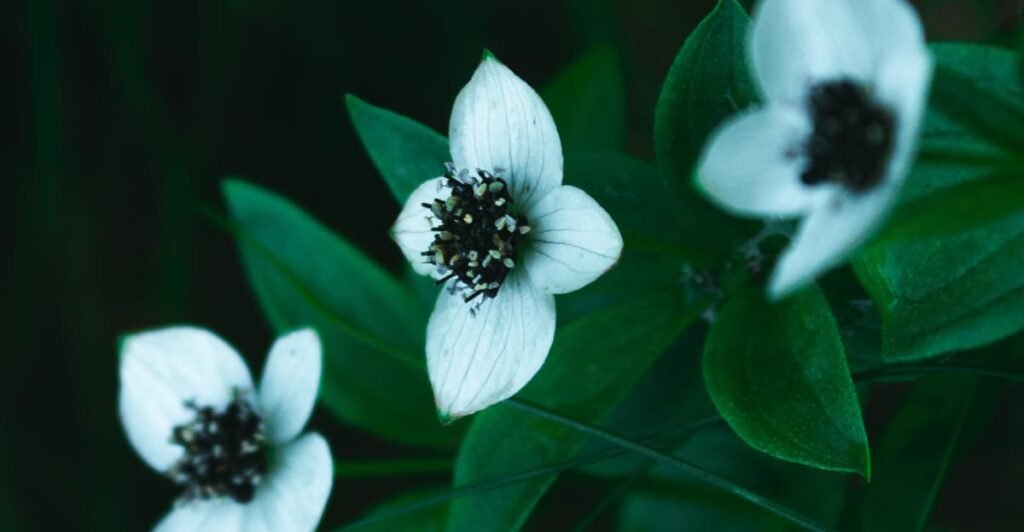
Table of Contents
What is the national flower of Canada?

Canada has no official national flower or officially recognized national floral emblem designated by the Canadian government. While the maple leaf is a prominent national symbol featured on the Canadian national flag, it is a leaf, not a flower. Canada instead celebrates its national identity through provincial floral emblems, territorial floral emblems, and regional botanical symbols.
Bunchberry (Cornus canadensis) is a potential national flower known for its widespread distribution across Canadian forests and its adaptability to northern climates. This native plant contributes to Canada’s indigenous plant life, botanical diversity, and natural heritage, but it has no official national designation.
From my experience studying native wildflowers, Bunchberry stands out as a fascinating representative of Canada’s forest ecosystems, even without official national flower status.
Why Canada Lacks a National Flower
Canada’s absence of a national flower does not reflect a lack of unique plants or culturally significant plants. Instead, its national identity, national symbolism, and botanical heritage are represented through established national symbols, including the maple leaf, the Canadian national flag, and the national anthem. While these symbols have gained historical significance and formal recognition through government actions and laws, no official national flower or federal flower has received formal designation.
Canada’s vast geographical diversity, stretching from the Atlantic provinces and Great Lakes to the Prairies, Pacific coast, northern forests, and Arctic areas, supports remarkable regional plant diversity. Consequently, provincial floral emblems, territorial floral emblems, and regional flowers represent local landscapes and identities rather than the entire nation. Bunchberry (Cornus canadensis) remains a potential national flower and a native Canadian plant, but it has no federal designation.
From my experience exploring Canadian botanical heritage, the country’s regional floral emblems offer a more varied picture of its native flora than a single national bloom could represent.
The Maple Leaf Became a Symbol Long Before the Flag
During the 19th century, the maple leaf became a powerful symbol of Canadian identity, appearing in Canadian culture, newspapers, literary works, and public life. In 1834, the Société Saint-Jean-Baptiste adopted the maple leaf emblem, strengthening its connection to national symbolism and Canadian heritage long before the modern national flag existed.
The leaf later appeared on military badges, sports uniforms, publications, and Canadian coins. Alexander Muir’s song The Maple Leaf Forever, written in 1867 for Confederation, further reinforced its cultural significance, while three maple leaves were added to the Royal Arms of Canada in 1921.
From my research into Canadian history, the maple leaf’s gradual rise from a familiar plant symbol to a defining national emblem shows how cultural traditions can shape national identity over generations.
How the Maple Leaf Became Canada’s Flag Symbol
Before 1965, the Union Jack served as Canada’s official flag, while the Canadian Red Ensign was widely used unofficially. In the early 1960s, Prime Minister Lester B. Pearson pushed for a distinctive national flag, especially with the Canadian centennial approaching in 1967, prompting a parliamentary committee to review designs in 1964.
Thousands of proposals featured the maple leaf, and historian and military officer George F. G. Stanley inspired the single-leaf design. The House of Commons approved it on December 15, 1964, by a vote of 163 to 78; after graphic artist Jacques St-Cyr refined the design into a stylized 11-point maple leaf, the flag was proclaimed on January 28, 1965, and first raised at Parliament Hill in Ottawa on February 15, 1965.
In my view, the maple leaf’s long history explains why it became Canada’s central flag emblem, while its status as a national symbol remains distinct from the designation of an official national flower.
Did Canadians Ever Choose a National Flower?
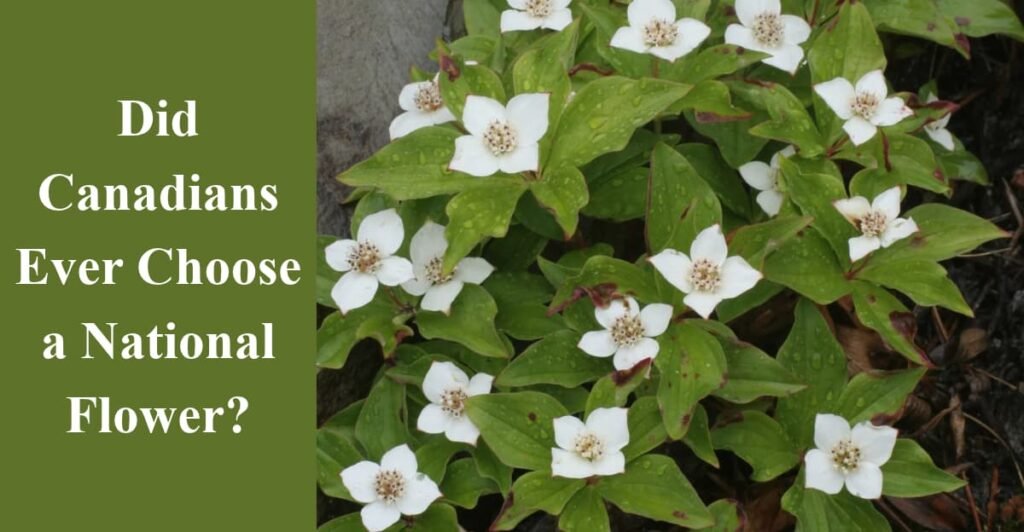
In 2017, during Canada’s 150th anniversary, the Master Gardeners of Ontario organized a nationwide national flower contest to encourage the adoption of an official national floral emblem. The finalists were three native species: Bunchberry (Cornus canadensis), Hooded Ladies’ Tresses (Spiranthes romanzoffiana), and Twinflower (Linnaea borealis), representing Canada’s diverse flora and regional botanical identity.
According to the House of Commons parliamentary record from December 2017, nearly 10,000 Canadians participated in the online voting, with 79.5 percent of the vote going to Bunchberry. Although this result demonstrated public interest and made Bunchberry a popular floral option, the independent horticultural contest was not an official Government of Canada election and did not establish an official federal symbol.
From my perspective, this contest is a useful example of how public participation can influence the national flower debate, even when official recognition and federal designation require a separate process.
Bunchberry: The Plant That Quietly Covers the Country

Bunchberry (Cornus canadensis) is a low-growing native wildflower found across much of Canada, thriving in cool forests, shaded woodlands, and moist habitats. Its delicate white bracts, tiny flowers, and bright red berries make it a distinctive part of Canada’s natural landscape.
Unlike showy garden flowers, Bunchberry grows close to the ground and often spreads across the forest floor, supporting the character and diversity of woodland ecosystems. Its wide distribution and connection to Canada’s wilderness help explain why it is often suggested as a potential national flower, although it has no official federal designation.
From a botanical perspective, Bunchberry’s quiet presence across Canadian forests makes it a compelling symbol of the country’s native plant life, even without formal national recognition.
What Is Bunchberry?
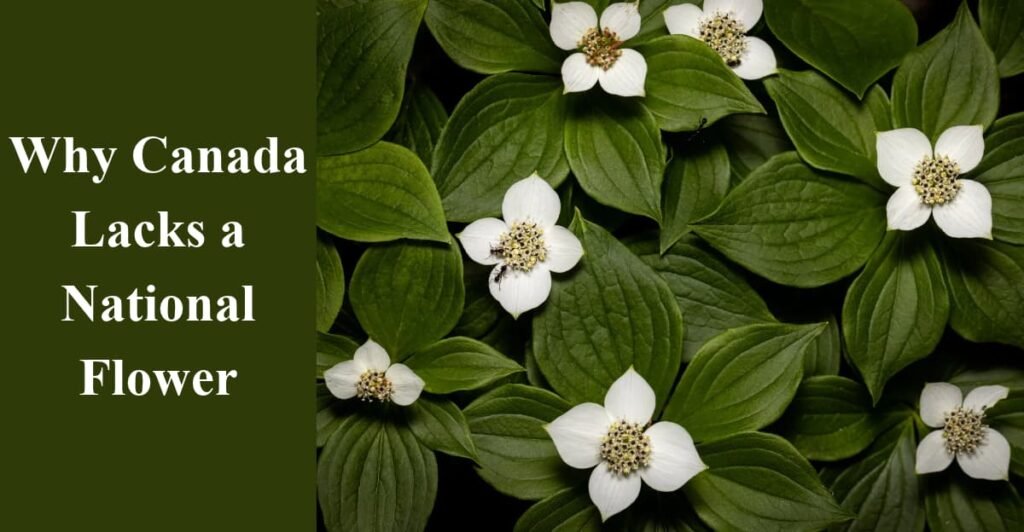
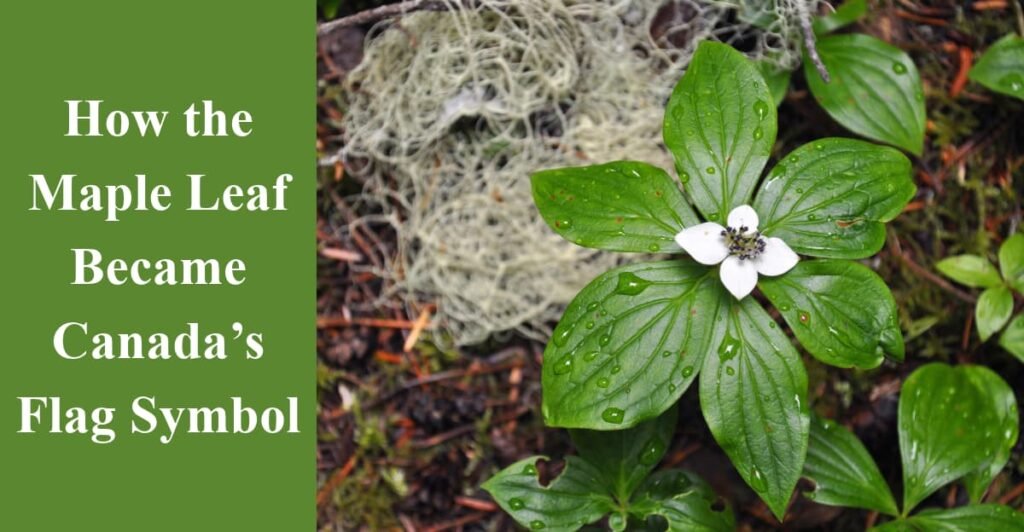
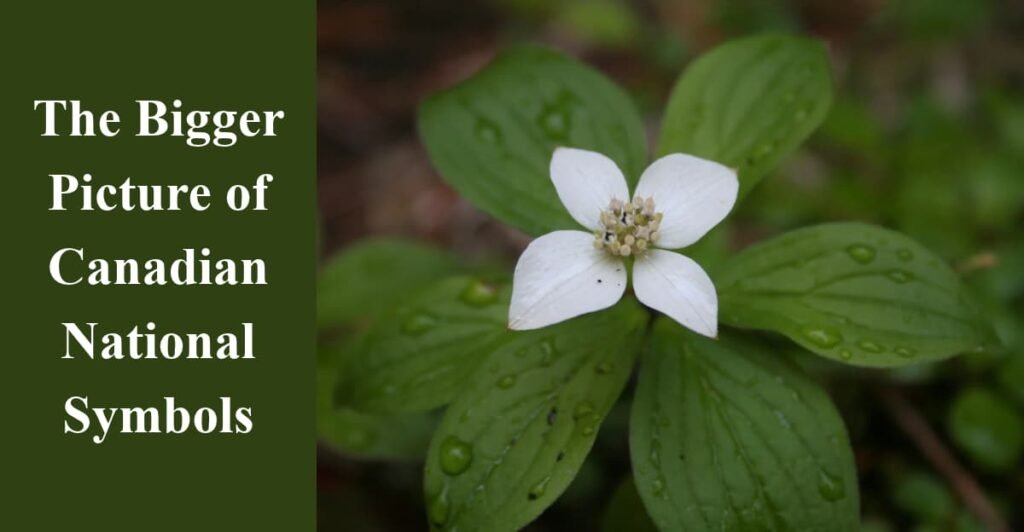
Bunchberry (Cornus canadensis) is a small, low-growing perennial plant in the dogwood family that thrives on the forest floor across Canada. Its short stems, green leaves, four white bracts surrounding tiny true flowers, and bright red berries give it a distinctive appearance.
What Does Bunchberry Look Like?
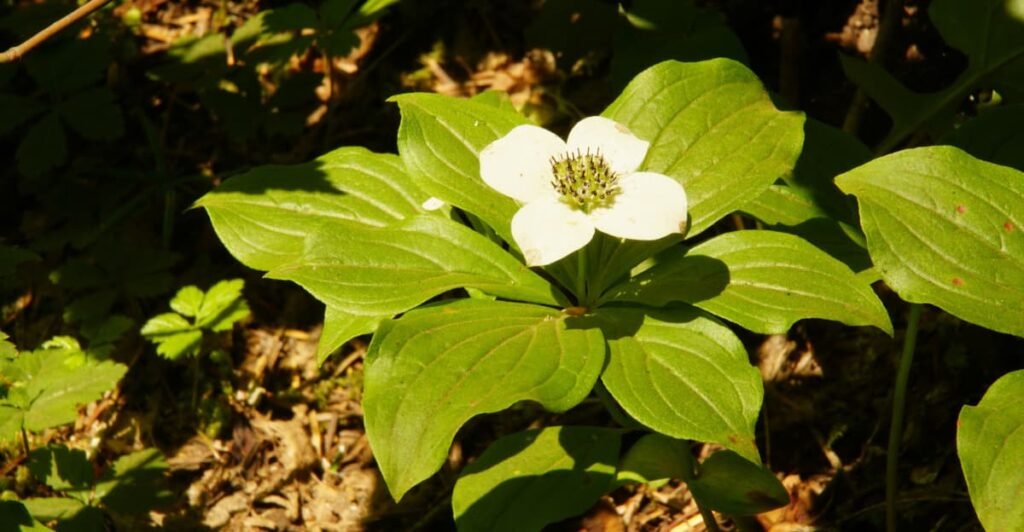
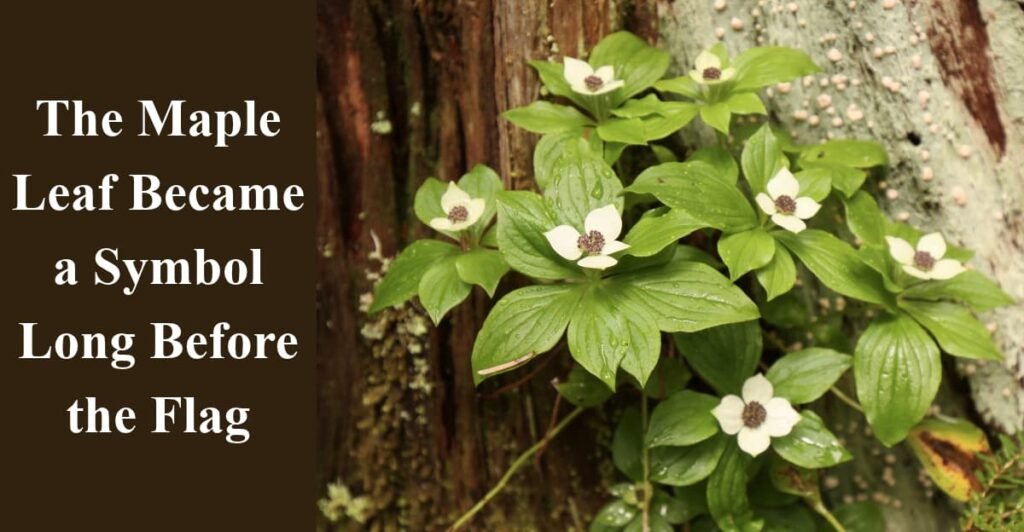
Bunchberry forms low patches of thick green cover, with leafy stems close to the ground and showy white bracts during its seasonal flowering period. After blooming, clusters of bright red berries appear, adding color and visual appeal to woodland vegetation.
Where Does Bunchberry Grow in Canada?
Bunchberry (Cornus canadensis) grows across much of Canada in forest habitats, with Natural Resources Canada records documenting its extensive distribution and hardiness across zones 0a to 8a. It can be found in protected areas such as Kouchibouguac National Park in New Brunswick and Forillon National Park in Quebec.
How Bunchberry Fits Canada’s Natural Landscape
Bunchberry adds to Canada’s natural landscape by growing beneath the forest canopy, where it forms part of the lower vegetation layer in woodlands and other shaded habitats. Its seasonal white blooms and red fruit reflect the diversity of Canadian native flora and contribute to the character of the country’s forests.
A Country of Provincial Flowers but No Federal Bloom

- Canada has 10 provinces and 3 territories, each with its own regional identity and many with officially recognized floral emblems, but the country has no official federal national flower.
- Canadian Heritage recognizes the importance of national symbols, while provincial and territorial floral emblems reflect local botanical diversity and cultural heritage.
- These provincial flowers and territorial flowers were adopted at different times through varied selection methods, including public participation, school campaigns, organizational efforts, and government decisions.
- Alberta’s wild rose became a provincial floral emblem in 1930 following a campaign involving schoolchildren, while Manitoba’s prairie crocus was selected through an informal school vote in 1906.
- Quebec’s blue flag iris received official recognition through legislation in 1999, while Newfoundland and Labrador adopted the pitcher plant as its floral emblem in 1954.
- Regional flowers also appear in provincial flags, coats of arms, heraldic designs, and government imagery, strengthening their role in official representation.
- For example, Saskatchewan’s western red lily and Alberta’s wild rose feature in their respective provincial symbolism, while British Columbia’s Pacific dogwood represents its regional botanical identity.
- These floral emblems create a rich collection of regional botanical symbols, but their separate adoption histories do not amount to a unified national effort to select an official national flower of Canada.
Canada’s Provincial and Territorial Floral Emblems
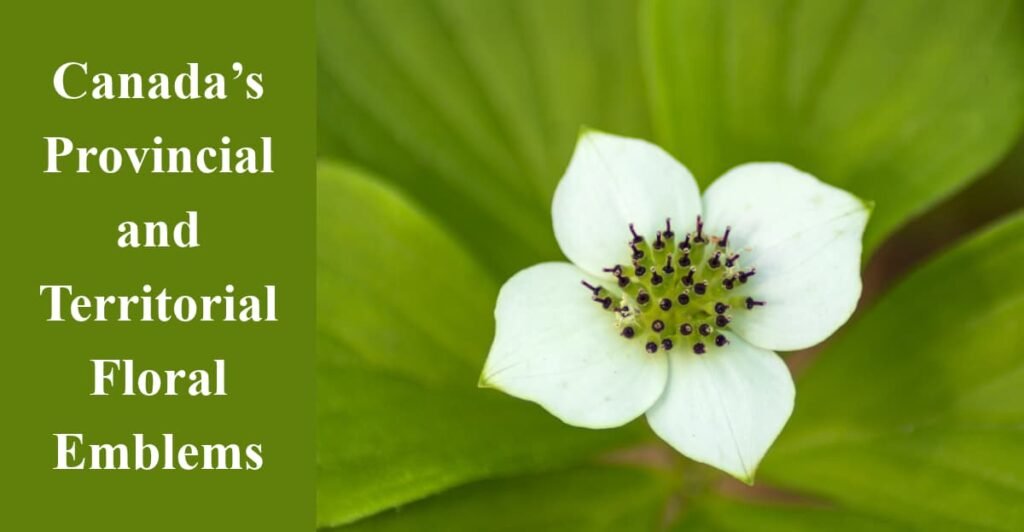
Canada’s 10 provinces and 3 territories have distinct provincial and territorial floral emblems that reflect the country’s botanical diversity, regional climates, and native flora.
- Alberta: Wild Rose (Rosa acicularis), a familiar symbol of the province’s natural heritage.
- British Columbia: Pacific Dogwood (Cornus nuttallii), recognized for its showy flowers.
- Manitoba: Prairie Crocus (Pulsatilla ludoviciana), a native wildflower associated with spring.
- New Brunswick: Purple Violet (Viola cucullata), representing the province’s floral heritage.
- Newfoundland and Labrador: Pitcher Plant (Sarracenia purpurea), an insect-eating plant adapted to nutrient-poor habitats.
- Nova Scotia: Mayflower, also called Trailing Arbutus (Epigaea repens), a low-growing woodland plant.
- Ontario: White Trillium (Trillium grandiflorum), a recognizable woodland flower.
- Prince Edward Island: Lady’s Slipper (Cypripedium acaule), a distinctive native orchid.
- Quebec: Blue Flag (Iris versicolor), a flowering plant found in wet habitats.
- Saskatchewan: Western Red Lily (Lilium philadelphicum), known for its bright, upward-facing flowers.
- Northwest Territories: Mountain Avens (Dryas octopetala), a hardy plant suited to northern conditions.
- Yukon: Fireweed (Chamerion angustifolium), a colorful wildflower that often grows in disturbed areas.
- Nunavut: Purple Saxifrage (Saxifraga oppositifolia), a resilient plant adapted to the Arctic climate and short growing season.
These emblems were adopted at different times, including 1901, 1906, 1930, 1937, 1999, and 2000, through various regional processes. Their recognition celebrates local botanical identity, but it does not establish a federally recognized national flower of Canada.
The Legal Mechanics of Becoming a National Symbol in Canada
- Canada’s national symbols can receive formal recognition through different legal processes, including Acts of Parliament, royal proclamations, and orders in council, depending on the symbol and the authority involved.
- The National Flag of Canada was officially proclaimed in 1965, while the beaver was recognized as a national symbol through the National Symbol of Canada Act in 1975.
- In 1996, the maple tree was designated Canada’s national arboreal emblem, demonstrating how federal recognition can extend to different aspects of the country’s natural heritage.
- Establishing an official national flower would require an appropriate formal process and federal recognition; a public vote or popular acknowledgment alone does not automatically create an official national symbol.
- The 2017 national flower petition and public campaign helped bring attention to Bunchberry as a proposed national floral symbol, but public support did not give it official federal status.
- Parliamentary authority, legislative recognition, and government decisions distinguish a legally designated symbol from a flower that is culturally popular or widely associated with Canadian identity.
- A national floral emblem could reflect Canada’s national botanical identity and cultural heritage, but formal adoption would be necessary to establish its official status.
Maple Leaf vs. Bunchberry
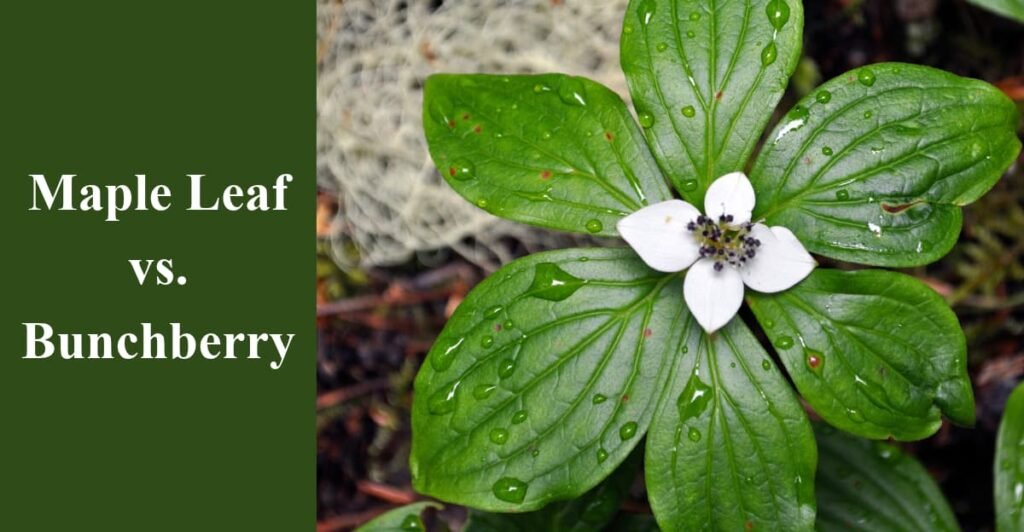
- The maple leaf is an established Canadian national symbol, featured on the National Flag of Canada and associated with the country’s identity for generations.
- In 1996, the maple tree was designated Canada’s national arboreal emblem, strengthening its official connection to Canadian natural heritage.
- Bunchberry (Cornus canadensis), by contrast, is a native flowering plant often suggested as an unofficial national flower candidate, but it has no formal federal recognition as a national floral emblem.
- During the 2017 national flower contest, Bunchberry received 79.5 percent of participating votes, showing public support for its potential designation.
- The key difference is that the maple leaf has an established role in official national symbolism, while Bunchberry’s status remains part of an ongoing national flower debate.
- Both contribute to Canada’s botanical identity, but only formal government recognition could establish Bunchberry as an official national flower.
The Bigger Picture of Canadian National Symbols
- Canada’s national symbols reflect its history, wildlife, natural landscapes, governance, and cultural identity. Some gained recognition through formal government action, while others became widely used through tradition and public association.
- The maple tree was designated Canada’s national arboreal emblem in 1996, recognizing its place in the country’s natural heritage. Canada has 10 native maple species, and maple trees are closely connected to its landscape, economy, and cultural identity.
- The beaver became an officially recognized national symbol through the National Symbol of Canada Act in 1975. Its historical association with Indigenous peoples, the fur trade, and Canada’s development contributes to its lasting significance.
- The National Flag of Canada, officially proclaimed in 1965, features a stylized 11-point maple leaf. The Coat of Arms of Canada, adopted in 1921, also incorporates the maple leaf as part of the country’s official representation.
- Together, these symbols form part of Canada’s national identity and appear in official insignia, public use, and international representation.
- Canada also has provincial and territorial floral emblems, which celebrate regional botanical heritage and local identity. However, these do not amount to federal recognition of a national flower.
- The distinction between official and unofficial symbols is important in the national flower debate: Bunchberry and other floral candidates may carry cultural significance, but Canada still has no officially designated national flower.
Conclusion
Canada has no officially recognized national flower, but Bunchberry (Cornus canadensis) remains a popular unofficial candidate because of its beauty and widespread presence in Canadian forests. The 2017 flower contest highlighted public support for Bunchberry, yet it has not received federal recognition. Explore Canada’s rich floral heritage and discover how its native plants reflect the country’s natural identity.
Frequently Asked Questions
1. What is the national flower of Canada?
Canada has no officially designated national flower. Bunchberry is often suggested as an unofficial candidate, while the maple leaf remains the country’s best-known national plant symbol.
2. Why is Bunchberry considered Canada’s national flower?
Bunchberry is a native wildflower found across much of Canada. Its widespread distribution and support in a 2017 national flower contest have made it a popular unofficial choice.
3. Did Bunchberry win Canada’s national flower contest?
Yes. In the independent 2017 contest organized by the Master Gardeners of Ontario, Bunchberry received 79.5% of participating votes. However, the contest did not give it official national status.
4. What is Canada’s official national floral symbol?
Canada does not have an officially recognized federal floral symbol. Instead, its provinces and territories have their own floral emblems, reflecting the country’s diverse native plants and regional identities.
Please Write Your Comments