Italy National Flower: Meaning, History, Symbolism, and Cultural Importance
Updated: September 19, 2026
21
Discover the Italy national flower, the elegant Madonna Lily, and uncover the fascinating history, symbolism, and cultural traditions behind this iconic floral emblem. From purity and national pride to Italian art, religion, and heritage, the lily reflects the beauty and identity of Italy. Keep reading to explore its meaning, historical roots, cultural importance, and enduring place in Italian life.

Table of Contents
What Is the National Flower of Italy?
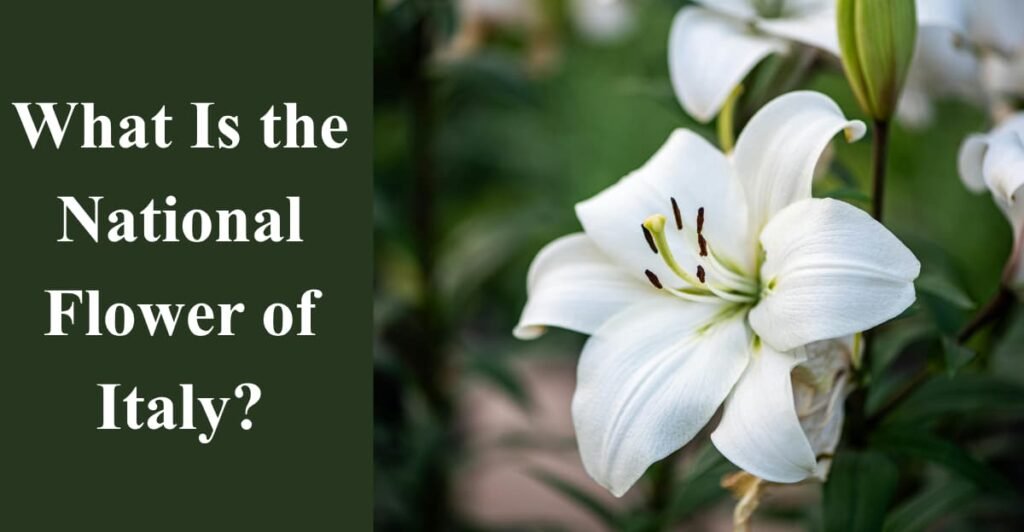
The Lily, especially the Madonna Lily (Lilium candidum), is widely recognized as Italy’s national flower and an important floral emblem of Italian national identity. Its stately appearance, ethereal fragrance, and long history across the Mediterranean connect it with Italy’s rich botanical heritage.
Italy’s biodiversity, from the Alps to the Mediterranean Sea, supports diverse plant species, including Cyclamen and Daisy, yet the Lily remains the overarching botanical representative. Found in Italian gardens, wild landscapes, and natural habitats, it reflects the country’s enduring floral identity.
I find the Madonna Lily especially fascinating because its elegant form and fragrance beautifully capture the character of Italian flora.
What Flower Represents Italy Officially?
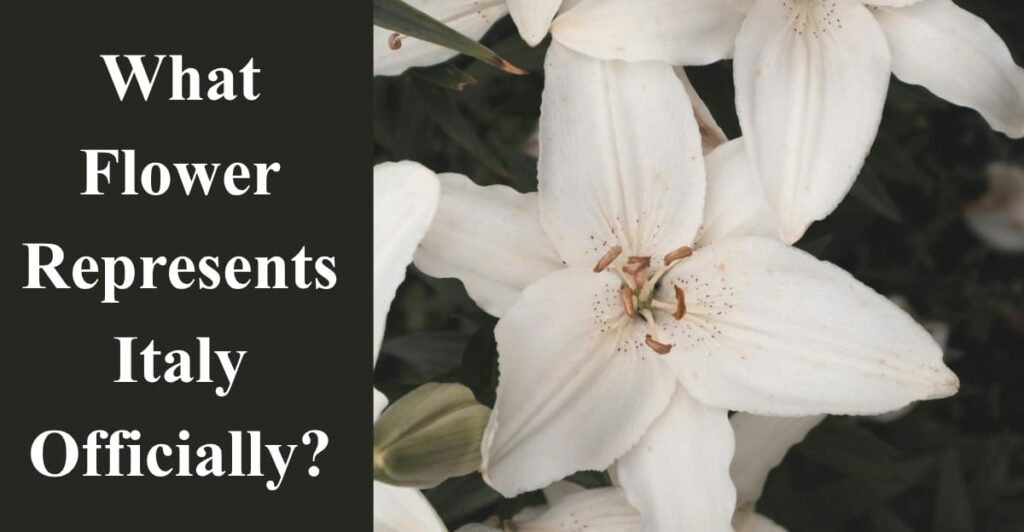
The White Lily, or Lily, is traditionally associated with Italy’s national flower, although its official designation is rooted more in tradition and cultural consensus than a formal legislative decree. Its ubiquitous presence in state ceremonies, historical emblems, ancient coins, and modern emblems strengthens its role as a floral symbol of national identity, cultural heritage, and national symbolism.
The Strawberry Tree (Arbutus unedo) is also considered a national plant, with its evergreen leaves, white blossoms, and red berries echoing the Italian flag and Italian colors. Still, the Lily remains closely tied to Italy’s aesthetic, philosophical heart, botanical heritage, state symbolism, and historical symbols.
In my experience with Italian floral traditions, the White Lily stands out because its beauty naturally connects botanical heritage with national and cultural symbolism.
The White Lily; Italy’s National Flower Explained
The White Lily (Lilium candidum) is a perennial, bulbous plant with large trumpet-shaped flowers, valued in Italian botany for its resilience and ability to grow in the alkaline soils of the Apennine Peninsula. Its Growth Habit is upright, often reaching one meter, while its powerful, sweet Aroma fills the vibrant air of an Italian spring.
Its Coloration features brilliant white petals and bright yellow anthers carrying pollen, while its geophyte nature allows the plant to survive unfavorable seasons within its bulb. This biological trait has become a metaphor for the ability of the Italian people to endure, bloom, and overcome difficult times; in 2026, Italian horticulturists continue emphasizing genetic purity, wild lilies, native lilies, horticulture, and biodiversity to preserve this staple of the Italian landscape and its botanical heritage.
I particularly appreciate the White Lily’s combination of strong fragrance, elegant floral characteristics, and remarkable plant growth, which makes it especially distinctive in the Italian landscape.
History Behind Italy’s National Flower
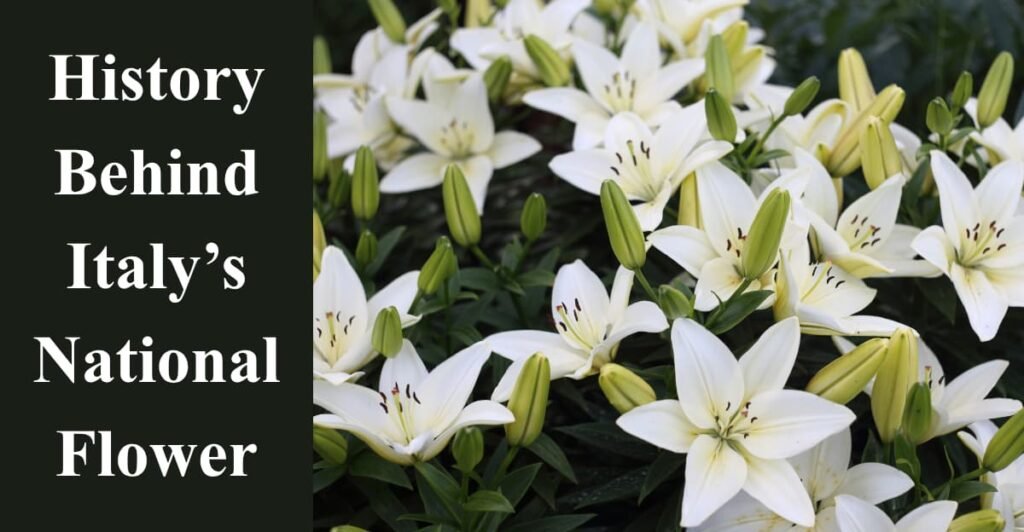
The Lily has deep roots in Italy’s history, tracing its cultural journey from Ancient Rome and the Roman Empire through the Middle Ages and the rise and fall of empires. In Roman mythology, Juno, the queen of the gods, was linked to Hercules through the story of nursing, where drops of milk reaching the sky became the Milky Way, while those falling to earth became lilies.
During the medieval period, the flower gained new meaning and importance as a heraldic staple, most famously through the Giglio di Firenze, or Lily of Florence, which became Florence’s city symbol in the 11th century. Its white lily on a red field was later inverted to red on white, demonstrating how a simple blossom evolved into a powerful political tool, cultural tool, historical emblem, and floral emblem through Italian history, Italian culture, symbolism, and heraldry.
I find Lily’s connection with Roman mythology and Florence especially fascinating because it shows how one flower can carry botanical, political, and cultural meaning across centuries.
Why the White Lily Represents Italy

The Lily is a representative of Italy because its selection reflects both visual alignment and symbolic alignment between its flower traits and the nation’s ideals. Its elegance, tradition, artistry, clean lines, and graceful stature complement the qualities associated with Italian identity, while its status as a native species adapted to different microclimates reinforces its connection with the country.
From the sun-drenched hills of Sicily to the temperate gardens of Lombardy, the flower finds a home, giving it remarkable ubiquity as a recognizable symbol beyond the elite and among ordinary citizens. As a recognizable feature of native flora, it reflects shared heritage that extends beyond regional dialects and culinary differences, strengthening Italian identity, cultural identity, national symbolism, botanical heritage, regional diversity, Italian landscape, natural adaptation, floral representation, and cultural heritage.
In my experience studying Italian floral symbolism, the Lily feels particularly fitting because its widespread presence makes the connection with Italy feel both elegant and genuinely rooted in the landscape.
Symbolism of Italy’s National Flower
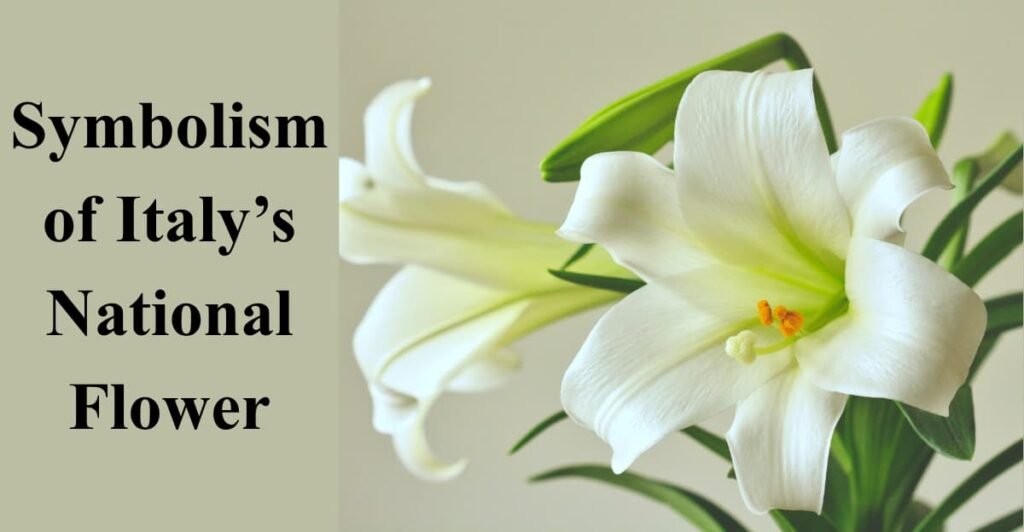
The White Lily carries rich symbolism through purity, innocence, rebirth, and the language of flowers, or floriography, where it is regarded as an ultimate sign of virtue. Its White Petals suggest purity of spirit, the sacred nature of the family, while its Yellow Anthers evoke intellectual radiance and the warmth of the Mediterranean sun. The Strong Stem represents resilience, strength, and the enduring Italian character, making the flower more than a plant or decorative symbol it becomes a philosophical anchor within Italian culture and national symbolism.
In the modern 2026 context, these symbols continue shaping Italian design, fashion, and branding, where the lily motif communicates high quality and classic elegance. Its floral symbolism, cultural interpretation, flower symbolism, Italian identity, Mediterranean culture, aesthetic, visual motif, heritage, tradition, sacredness, intellectual qualities, strength, and elegance keep its meaning relevant across contemporary Italian life.
Cultural Significance of the Italy National Flower
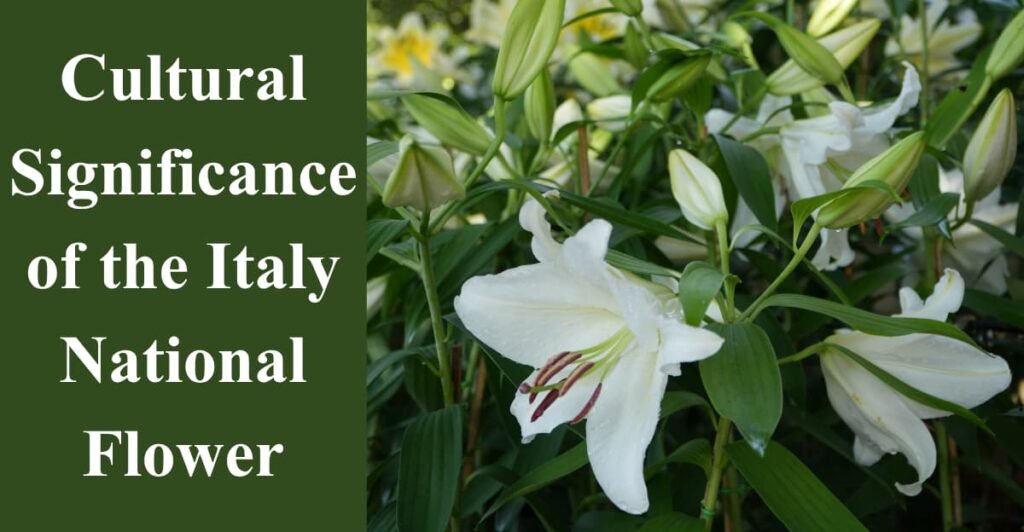
The Lily has strong cultural significance as the Italy national flower, extending beyond a distant symbol in a textbook into the daily life of Italians and the country’s social fabric. During the Renaissance, it became an admired flower among poets and thinkers, appearing in the verses of Dante and Petrarch, linking the bloom with Italian literature, poetry, and Renaissance culture.
Today, the flower remains visible in festivals such as Infiorate, where flower petals are arranged into massive, intricate carpets across the streets of towns including Genzano and Spello. The Lily often creates white space and highlights within these temporary masterpieces, demonstrating its artistic value and communal value while connecting Italian culture, cultural heritage, Italian traditions, floral traditions, community, floral art, street art, flower decoration, artistic expression, communal traditions, and national identity.
From my experience exploring Italian floral traditions, I find the Lily especially meaningful because it connects beauty, history, and culture in a very natural way.
Italy National Flower in Religion and Traditions
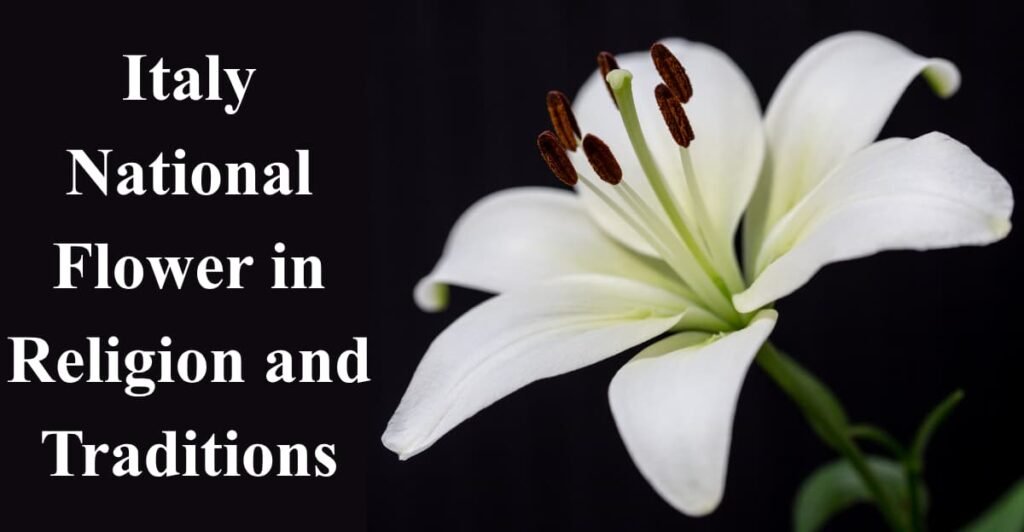
The Lily has a deep connection with Christianity and is known as the Madonna Lily, symbolizing the Virgin Mary and her purity. In religious art, the Angel Gabriel is often shown giving a lily to Mary during the Annunciation, while Saint Anthony of Padua carries it as a sign of holiness and devotion.
White lilies are a traditional choice for Italian brides because they represent a new beginning and a pure heart. At funerals, they can symbolize the soul of the departed returning to innocence, making the flower an important part of Italian religious culture, wedding traditions, funeral traditions, cultural heritage, and national identity.
I find the Lily especially meaningful because it naturally connects faith with important moments in Italian life.
Italy National Flower Meaning in Italian Culture
In Italian culture, the Lily reflects La Bella Figura, the idea of presenting one’s best self to the world with confidence and grace. Its refined appearance reflects aesthetic perfection and social harmony while its history gives it a strong sense of regality, prestige, and nobility.
Through its connection with noble families and city-states, the flower recalls centuries of civilization, struggle, and triumph. It has become a visual shorthand for the Mediterranean soul and remains closely linked with Italian identity, cultural identity, national symbolism, heritage, history, elegance, beauty, and artistic values.
From my experience exploring Italian floral heritage, the Lily stands out because its beauty carries a strong sense of history and cultural pride.
Where the Italy National Flower Grows
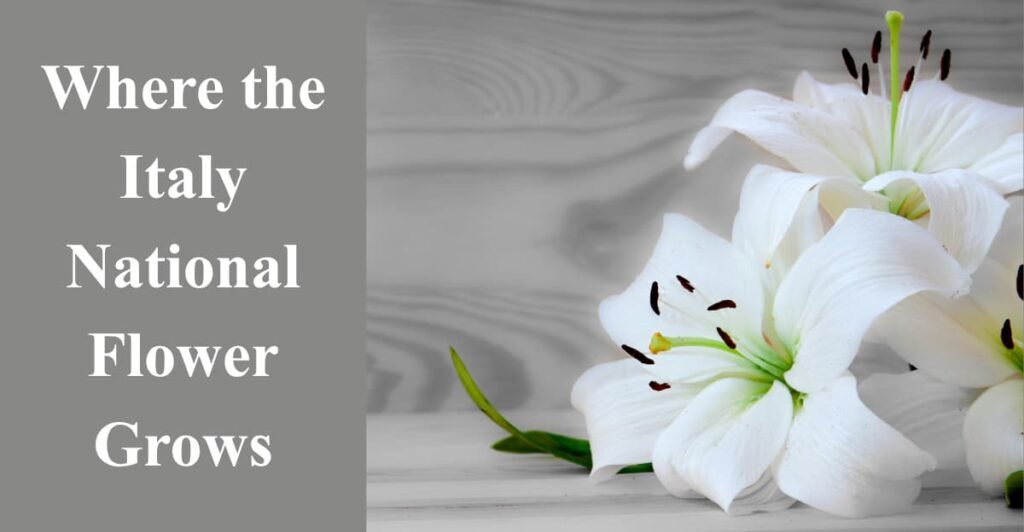
The Lily grows in different parts of Italy and can be found in cultivated gardens as well as the wild. In the mountainous regions of the Apennines it favors the lower slopes where cool nights create suitable conditions. It also grows in coastal maquis and other shrubby areas near the sea where the soil is well-drained. Ancient monasteries in Umbria and Tuscany have also preserved monastic gardens and lily gardens for centuries.
In 2026, ecotourism and floral trekking are bringing more visitors to see these flowers in their natural habitat. These treks highlight the need for conservation and protection of native flora as urban sprawl affects wild lilies, Italian landscape, mountain habitats, coastal habitats, and monastery gardens, while also supporting biodiversity and environmental protection.
I find seeing lilies in natural Italian settings especially rewarding because their beauty feels more authentic when surrounded by the landscape that supports them.
Italy National Flower in Art and Architecture
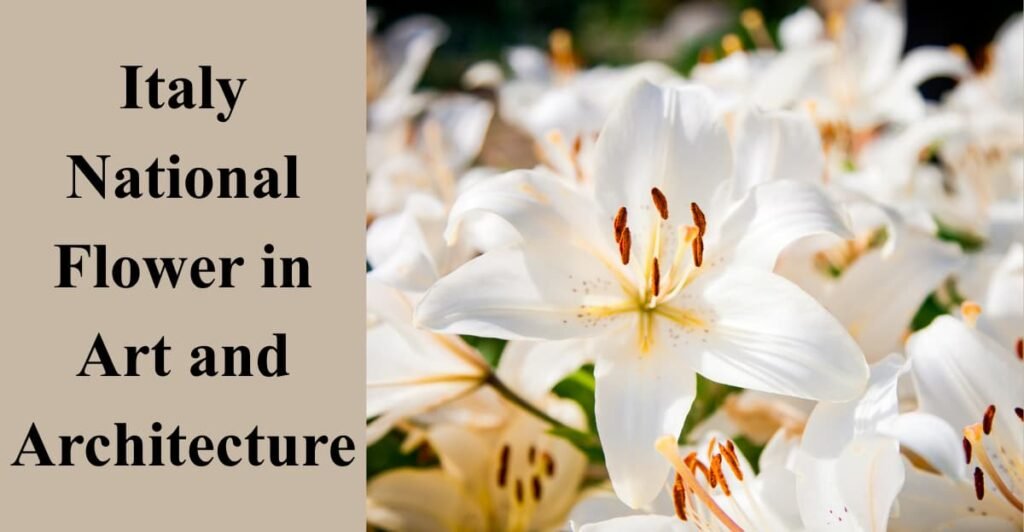
The Lily is a fundamental motif in Italian architecture, appearing in Corinthian capitals on Roman columns and in Baroque carvings across Sicilian churches. These stylized versions of the lily family show how the flower became part of Italian art and architectural ornamentation.
The Lily of Florence remains a highly recognizable architectural symbol and heraldic symbol, especially around the Palazzo Vecchio, where it appears throughout the city and its stones. Master painters such as Botticelli used the flower to suggest divine presence in their works, while its flower structure and three-part symmetry influenced geometric patterns in Italian tile-work and textiles. This lasting presence connects Renaissance art, Roman architecture, Baroque architecture, Italian art, decorative arts, floral motif, cultural heritage, heraldry, Florentine symbol, artistic expression, and geometric design.
In my experience, the Lily becomes even more fascinating in Italian art because its simple form can appear both elegant and deeply symbolic across different periods.
Interesting Facts About Italy’s National Flower
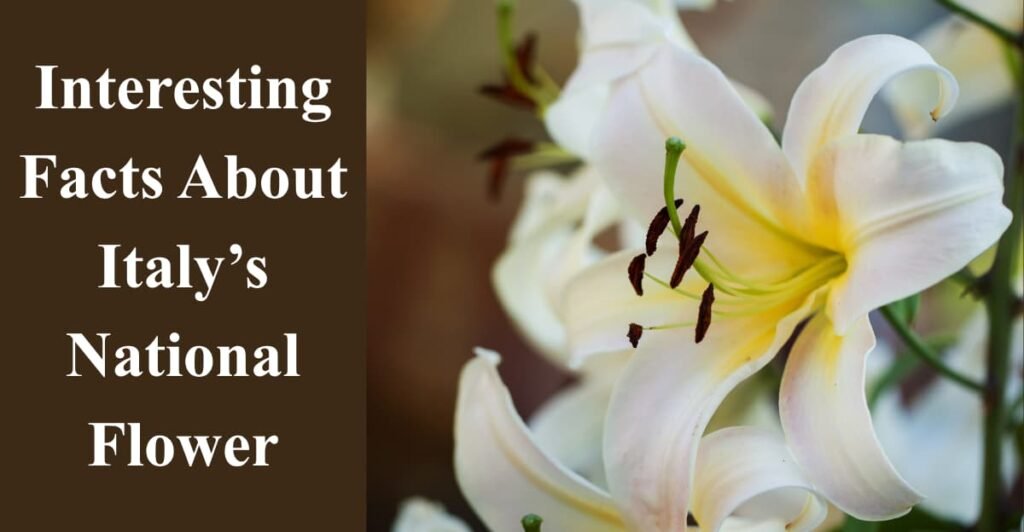
Lily has a surprisingly varied history. Its bulb was once linked with traditional medicine and even used as famine food, while its essential oils later became valuable in the fragrance industry and high-end perfumes associated with Grasse and Florence. Another interesting detail is the Poppy Rivalry because the Red Poppy is so common across Italian fields that some tourists mistake it for the official symbol.
The Lily also represents longevity because its bulb can survive for many years and produce new blooms each spring, giving it associations with eternal life, medicinal uses, traditional uses, culinary history, fragrance, perfumery, floral symbolism, regeneration, perennial growth, symbolism, and natural longevity.
I find these facts interesting because Lily has played practical, artistic, and symbolic roles rather than being valued only for its beauty.
Italy National Flower vs Other Countries’ National Flowers
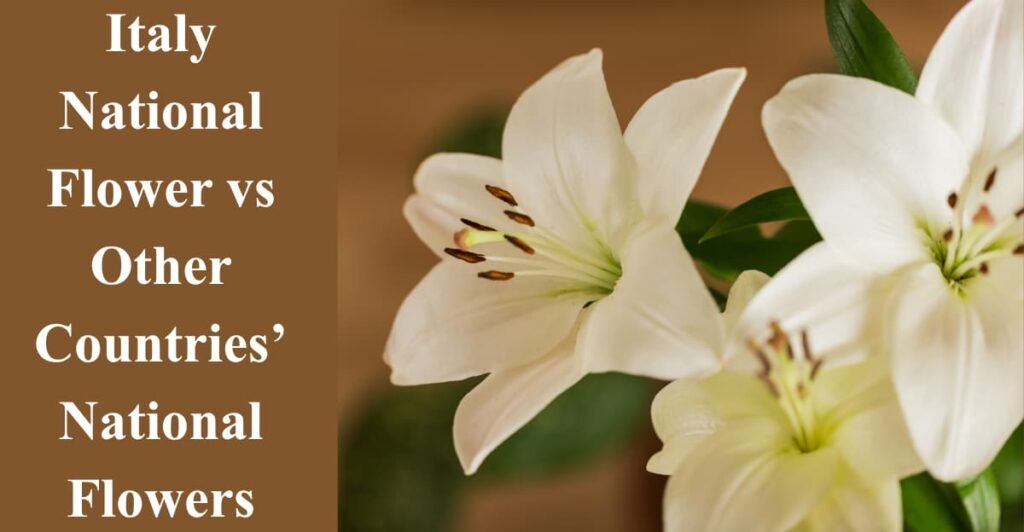
Comparing the Lily with other national symbols reveals interesting links between countries, geopolitics, and botany. Italy is represented by the White Lily through themes of purity and heritage, while France is associated with the Iris or Fleur-de-lis and ideas of royalty and power. England uses the Tudor Rose to express unity and history, while the USA uses the Rose to represent love and diversity.
France’s Fleur-de-lis is sometimes confused with the Italian Lily, but the Italian version is more botanically accurate to the Lilium genus, while the French symbol is a stylized Iris. This distinction is a point of pride for Italian botanists and highlights differences in national flowers, comparative botany, floral symbols, cultural symbolism, royal symbolism, national identity, botanical classification, Italian heritage, French heritage, and English heritage alongside American heritage.
I find this comparison useful because it shows how similar-looking floral symbols can carry very different meanings across cultures.
When the Italy National Flower Is Used
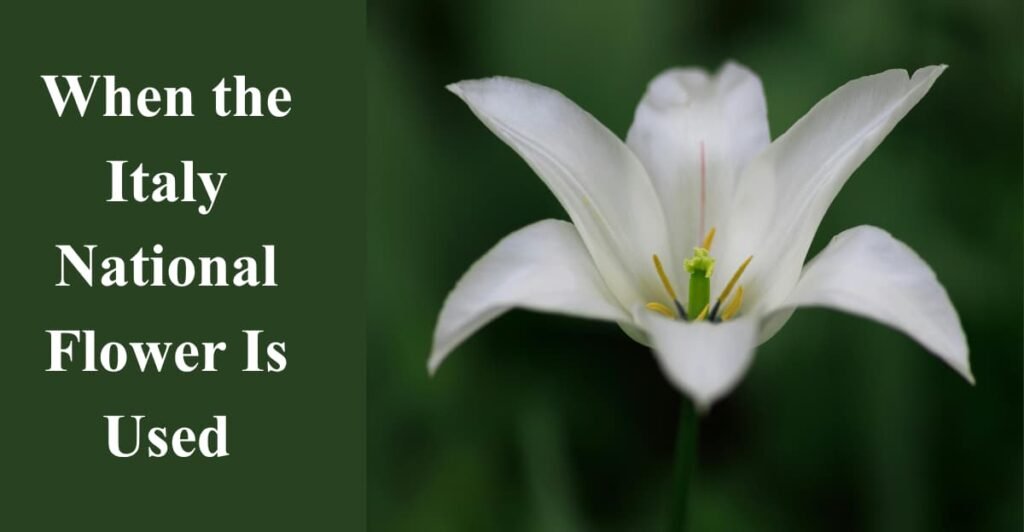
The Lily takes center stage at specific times of the year, with Easter being one of the most prominent occasions. The Easter Lily, a close relative, is widely used to decorate churches, while June 13th, the feast of Saint Anthony, brings displays of lilies and processions across the country.
In modern 2026, the flower also appears in diplomatic settings during international summits, where White Lily arrangements can reinforce Italy’s cultural identity and peaceful intentions. Its use as soft power connects beauty with dialogue, diplomacy, religious celebrations, Italian traditions, feast day customs, processions, international relations, national representation, cultural diplomacy, peace symbolism, and diplomatic symbolism.
From my experience with Italian floral traditions, the Lily feels most powerful when it appears in both sacred celebrations and public cultural events.
Italy National Flower in Modern Times
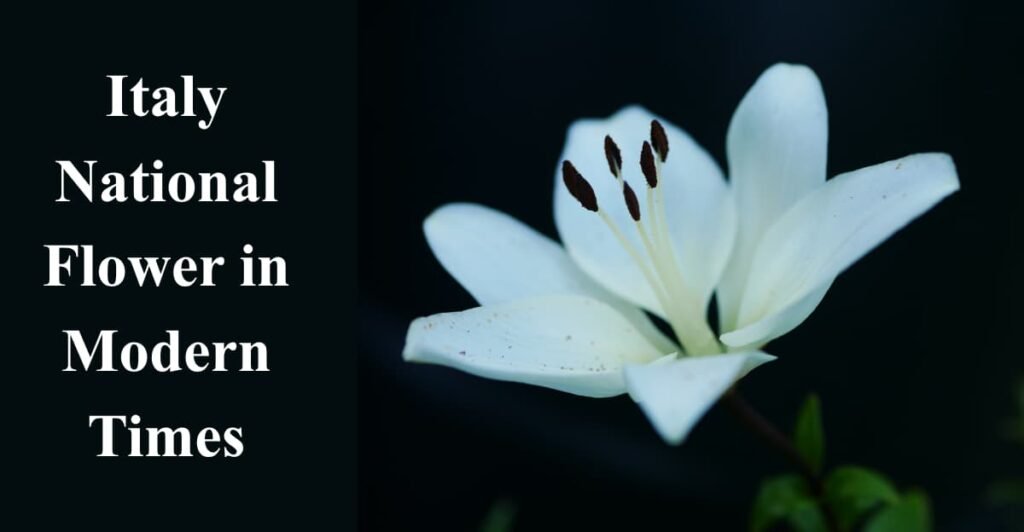
In the current era, the Lily has moved beyond its traditional role into digital space and sustainable space. Sustainability initiatives in Italy use the flower in Green Italy campaigns and as a logo that signals a commitment to natural roots, the environment, and environmental protection. In 2026, Italian tech startups have also adopted the Lily in branding to communicate transparency, innovation, and excellence.
The flower has successfully evolved from a religious icon into a modern symbol without becoming a relic of the past. As a living part of the nation’s journey toward the future, the italy national flower can appear in a Renaissance painting or a 21st-century app, representing digital branding, sustainable development, green campaigns, technology, entrepreneurship, modern identity, innovation, environmentalism, cultural evolution, national identity, contemporary Italy, religious heritage, and artistic heritage.
I think Lily’s ability to fit naturally into modern design while retaining its historical meaning makes it one of Italy’s most adaptable floral symbols.
Conclusion
The Italian national flower, the Madonna Lily, represents much more than beauty, carrying powerful meanings of purity, heritage, faith, and national identity. From ancient history and Renaissance art to Italian traditions and modern culture, the Lily continues to reflect the country’s enduring connection with nature and symbolism. Explore the fascinating story of Italy’s national flower to discover how this elegant bloom remains an important part of Italian history, culture, and botanical heritage.
Frequently Asked Questions
1. What is the national flower of Italy?
The Madonna Lily (Lilium candidum) is widely recognized as Italy’s national flower and is closely associated with Italian heritage, purity, and cultural identity.
2. Why is the White Lily important to Italy?
The White Lily represents purity, elegance, tradition, faith, and national pride. Its long association with Italian art and religious traditions has strengthened its cultural importance.
3. What does the Italian national flower symbolize?
The Lily commonly symbolizes purity, innocence, rebirth, virtue, resilience, and elegance. It also represents aspects of Italian cultural and religious heritage.
4. Is the Strawberry Tree Italy’s national flower?
The Strawberry Tree (Arbutus unedo) is often regarded as an important national plant rather than the primary national flower. Its green leaves, white flowers, and red berries resemble the colors of the Italian flag.
Please Write Your Comments