Honduras National Flower: A Complete Guide to the Elegant Orchid
Updated: September 6, 2026
28
Discover the Honduras national flower, Rhyncholaelia digbyana, an elegant orchid celebrated for its exotic beauty, citrus-like fragrance, and rich cultural heritage. From its tropical forests and epiphytic growth to its role as a powerful national symbol, this remarkable flower reflects Honduras’s extraordinary biodiversity. Keep reading to explore its history, meaning, habitat, characteristics, and conservation and uncover what makes this orchid truly special.
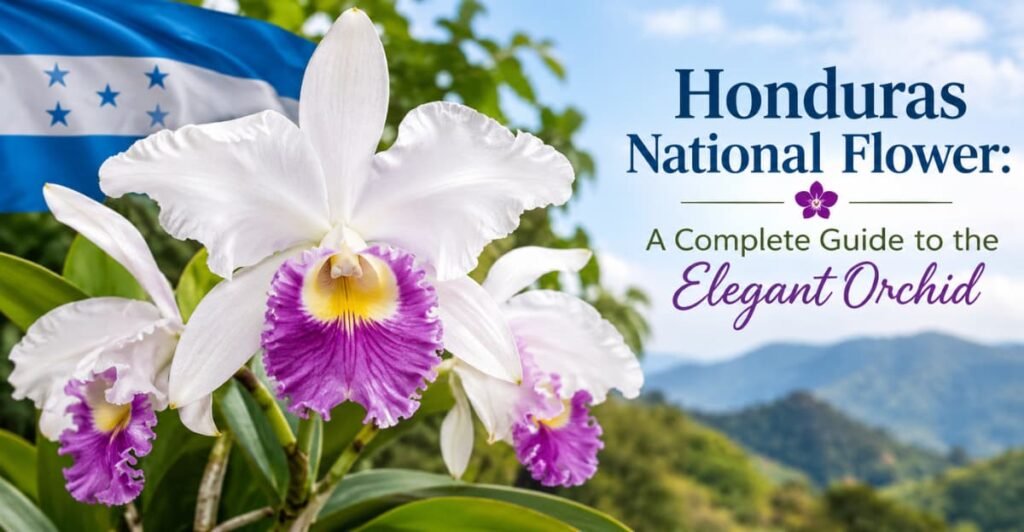
Table of Contents
What Is the Honduras National Flower?
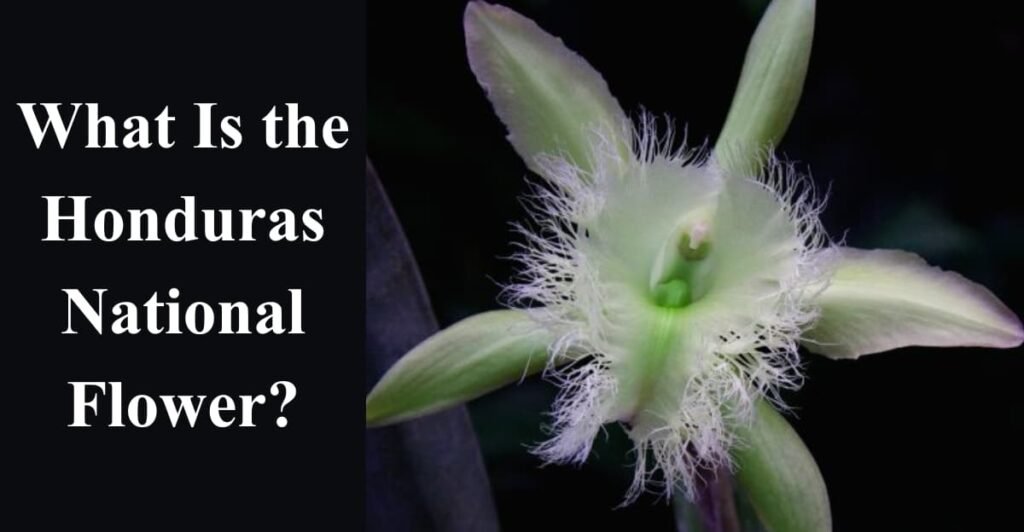
The Honduras national flower is an epiphytic orchid species, Rhyncholaelia digbyana, valued for its massive blooms, waxy petals, and deeply fringed labellum. It holds a prestigious place in the nation’s national identity, botanical identity, and national symbolism.
Unlike the rose, this indigenous species reflects Honduras’s tropical biodiversity and biological importance, belonging to the Orchidaceae family. As a national emblem, the orchid appears in official documents, educational materials, and national representations.
I find this orchid especially fascinating because its delicate, lace-like lip gives the national flower a truly distinctive botanical character.
Scientific Name of Honduras National Flower
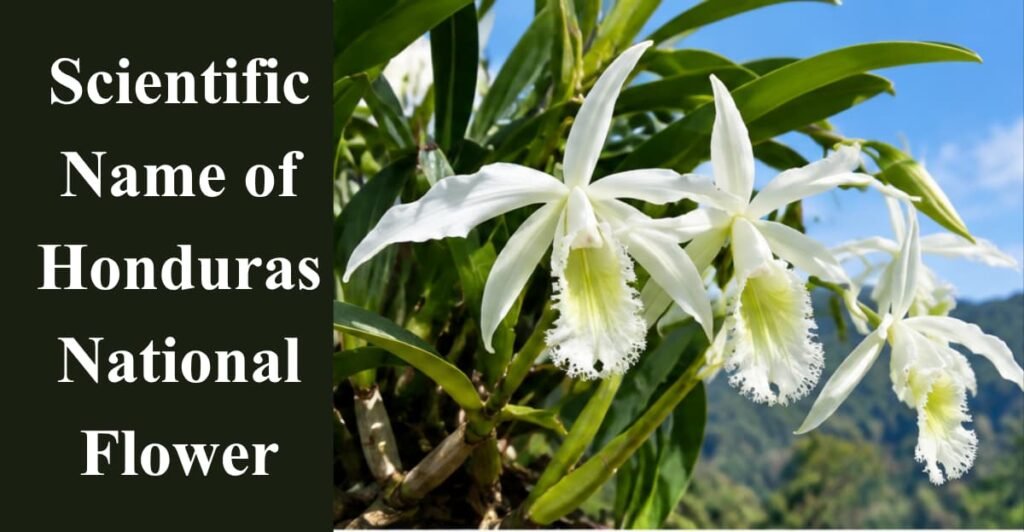
The scientific designation of Honduras’s national orchid is Rhyncholaelia digbyana, a species in the Rhyncholaelia genus, alongside Rhyncholaelia glauca. It was historically known as Brassavola digbyana, a name still found in older botanical texts, before taxonomists recognized its distinct morphological differences and revised its nomenclature.
Its taxonomic classification places the plant in the Kingdom Plantae and Family Orchidaceae, with R. digbyana as the recognized Species and Digby’s Beaked Laelia as its Common Name. Edward St. Vincent Digby provided the first specimen for scientific description in the mid-19th century, while modern researchers continue genetic research into its plant genetics, taxonomy, morphology, and unique fragrance profile.
I find its changing botanical nomenclature especially interesting because it shows how ongoing botanical research refines our understanding of orchid relationships.
History of Honduras National Flower
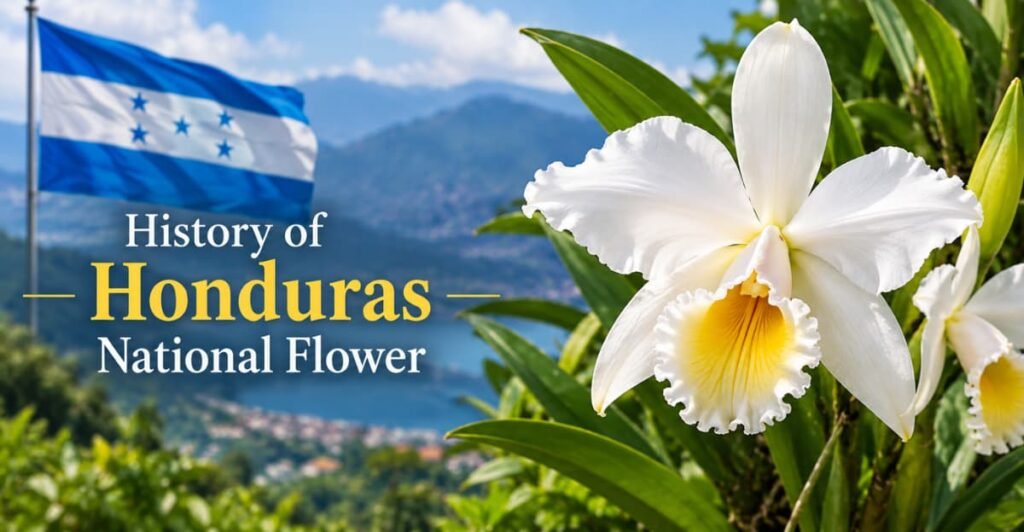
From 1946 through the late 1960s, the rose served as Honduras’s national flower, but citizens and scholars felt that this non-native plant did not fully represent the country’s natural environment, Honduran spirit, and native flora. The search for a more authentic national symbol eventually brought attention to the orchid’s uniqueness and connection with the Mesoamerican landscape.
On November 26, 1969, the National Congress of Honduras passed a decree officially naming Rhyncholaelia digbyana the new national flower, with José Antonio Molina Rosito, a respected Honduran botanist and professor at the Zamorano Pan-American School of Agriculture, playing an important role through his research. This national designation strengthened the country’s appreciation of its natural heritage, indigenous flora, and botanical history.
I find this transition particularly meaningful because the orchid’s story connects government decisions with scientific research and Honduras’s native botanical identity.
Why the Orchid Became Honduras National Flower
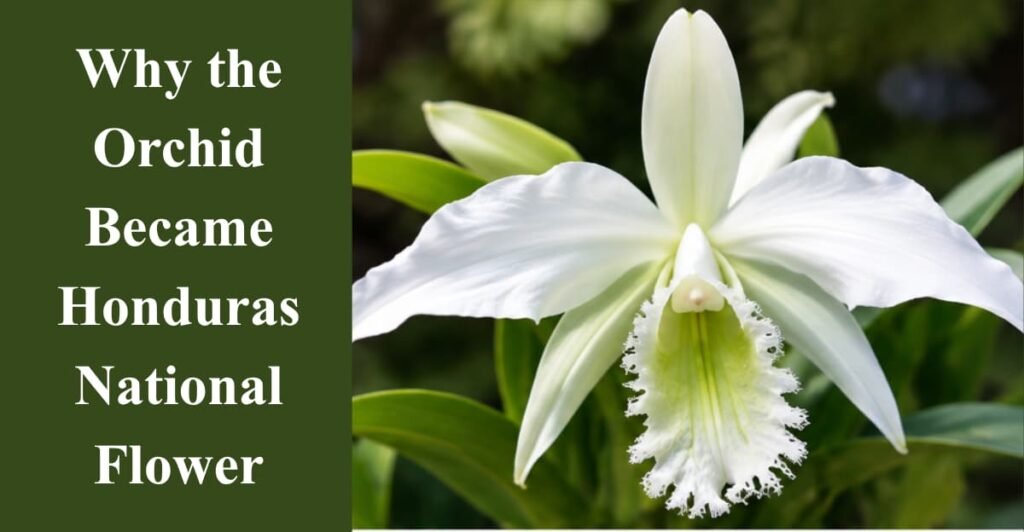
The orchid became the Honduras national flower because it offered a stronger sense of authenticity and represented the country’s natural heritage more closely than the rose, a cosmopolitan flower found worldwide. Rhyncholaelia digbyana is native to the region, particularly the dry forests and lowland forests of Honduras, making its Native Origin an important part of its national significance.
Native Origin: Rhyncholaelia digbyana is a native species and a true representative of the local ecosystem, local flora, and Honduras’s natural environment.
Unique Beauty: Its fringed lip and citrus-like scent give the flower a distinctive appearance and fragrance unlike many other flowers in the world.
Scientific Significance: With thousands of orchid species contributing to the country’s status as a biodiversity hotspot, the orchid reflects remarkable orchid diversity and scientific importance.
National Conservation: Choosing an indigenous flower encouraged national conservation, national pride, and greater appreciation for natural resources and biodiversity.
Botanical Heritage: The decision shifted attention away from colonial-era symbols toward an indigenous botanical identity rooted in the country’s botanical heritage and ecosystem.
For the government, selecting this orchid strengthened its role as a national representative of Honduras’s conservation values and natural identity. Its combination of native origin, Unique Beauty, and Scientific Significance continues to connect the flower with national pride and environmental awareness.
I find the choice particularly appropriate because the orchid represents Honduras through both its ecological roots and distinctive botanical character, rather than simply serving as a decorative national emblem.
Cultural Significance of Honduras National Flower
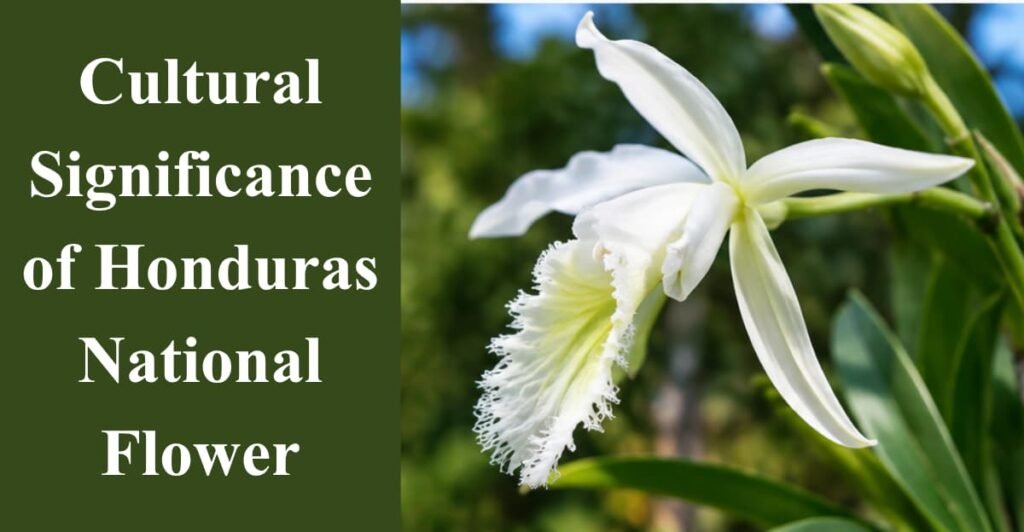
The orchid is more than a biological specimen in Honduras; its cultural significance makes it a source of immense pride and an important part of cultural identity. In Honduran schools, children learn about the Flor Nacional alongside the national anthem and flag, while the title Queen of the Forest serves as a metaphor for the beauty and resilience of the Honduran people.
Its presence in arts, traditional paintings, textiles, and modern digital art makes it a common motif during Honduran Independence Day and other patriotic holidays, reinforcing its role as a botanical symbol and national symbol. As an epiphyte or epiphytic plant that grows on trees without harming them, it represents harmony, balance, and environmental harmony within nature, reflecting the communal values of many Honduran societies, while its natural heritage, artistic representation, traditional art, patriotic symbolism, and connection to the ecosystem deepen its national meaning.
I find the orchid especially compelling because its natural growth habit provides a powerful living example of balance that translates beautifully into Honduran cultural symbolism.
Symbolism and Meaning of Honduras National Flower
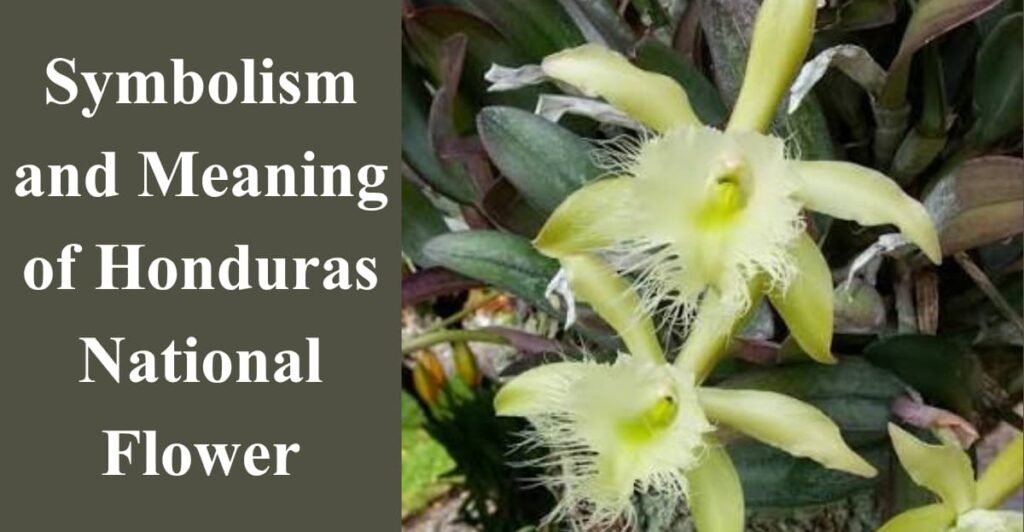
Rhyncholaelia digbyana carries multifaceted symbolism, with its white-to-greenish hue, pale petals, and translucent petals often associated with purity, lushness, and the richness of the tropical landscape. Its fringed flower reflects complexity and the intricate details of the natural world, while its ability to thrive in harsh forests and dry forests represents resilience and the strength to endure pressure.
Purity: The pale appearance of the orchid symbolizes a clean future and bright future for the nation.
Resilience: Its survival in challenging tropical environment conditions reflects ecological resilience and endurance.
Fragrance: The powerful orchid fragrance, strongest at night, suggests hidden beauty and the mysteries of the Central American jungles.
These symbolic meanings add depth to discussions of botany, cultural history, botanical symbolism, and cultural symbolism, while supporting national identity and appreciation of natural beauty. In modern SEO, this semantic richness helps content rank for relevant queries because critical entities connect naturally across the semantic web.
I find the orchid’s symbolism especially meaningful because its delicate appearance contrasts with the ecological strength needed to survive in dry tropical habitats.
Types of Orchids Found in Honduras
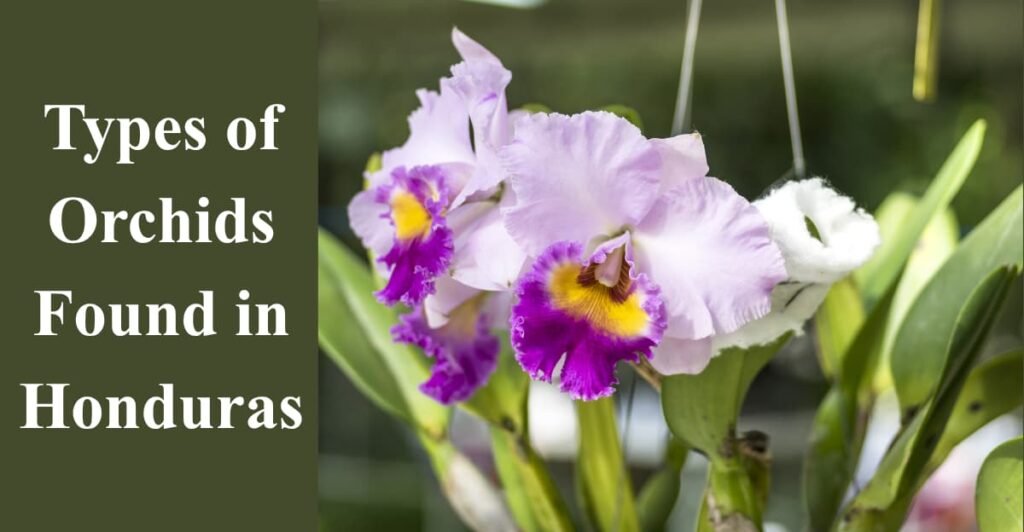
Honduras is a remarkable destination for orchid enthusiasts, with more than 800 different species growing across varied topography, from misty cloud forests to humid coastal swamps. This environmental diversity allows numerous orchid genera to flourish, creating an impressive range of forms, habitats, and growth patterns.
Cattleya: Known for large flowers and showy flowers, this group is frequently involved in hybridization with the national flower to develop modern hybrids.
Epidendrum: A massive genus with varied growth habits, particularly common in high-altitude regions.
Oncidium: Often called dancing lady orchids because of their distinctive floral shapes.
Sobralia: Includes large terrestrial orchids with beautiful blooms that are often short-lived blooms.
Among this remarkable orchid diversity, Rhyncholaelia digbyana has a specific role because its fringed lip is a valuable trait sought by breeders worldwide. Its use in hybrid orchids and orchid breeding has helped make it a genetic ancestor of orchids seen in flower shops, adding to Honduras’s genetic heritage and rich collection of orchid species.
I find comparing these orchid groups particularly useful because their contrasting growth habits and flower shapes make the country’s orchid diversity much easier to appreciate.
Natural Habitat of Honduras National Flower
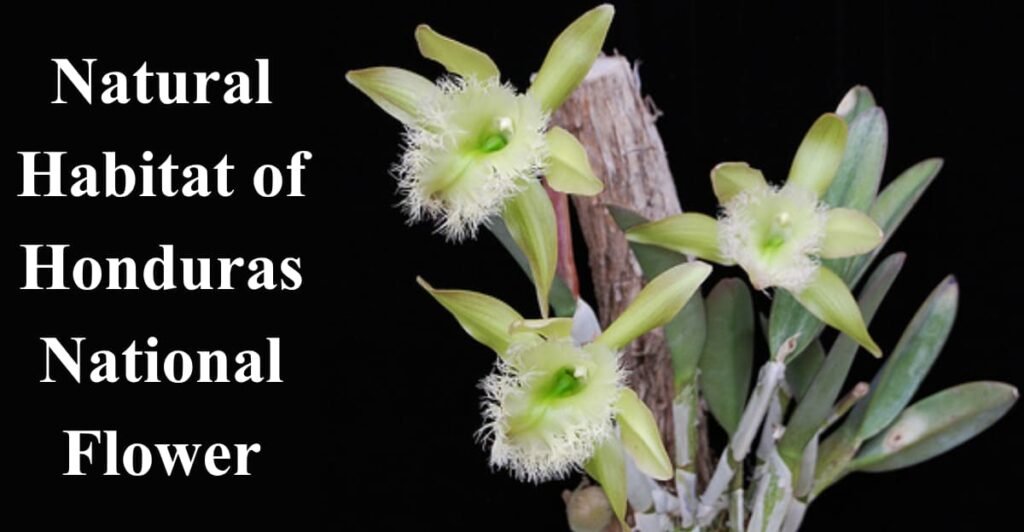
Rhyncholaelia digbyana naturally inhabits lowland forests and dry tropical regions of Honduras, as well as Belize and Mexico, where its epiphytic growth allows it to anchor to tree bark rather than soil. As an epiphyte, it uses its roots to obtain moisture and minerals from the air and rainwater, while stunted trees, sunlight, and good air circulation support its specific needs.
This orchid favors a canopy lifestyle, where the forest canopy provides filtered tropical sun and filtered sunlight, keeping it above the damp forest floor and dark forest floor. In its natural state, it can be found in Cortés, Atlántida, and Santa Bárbara departments, thriving in tropical forests, lowland habitat, and dry forests through efficient mineral absorption and moisture absorption.
I find its canopy-based growth especially fascinating because the plant’s roots, light requirements, and natural habitat work together as a remarkably efficient tropical adaptation.
Climate and Growing Conditions
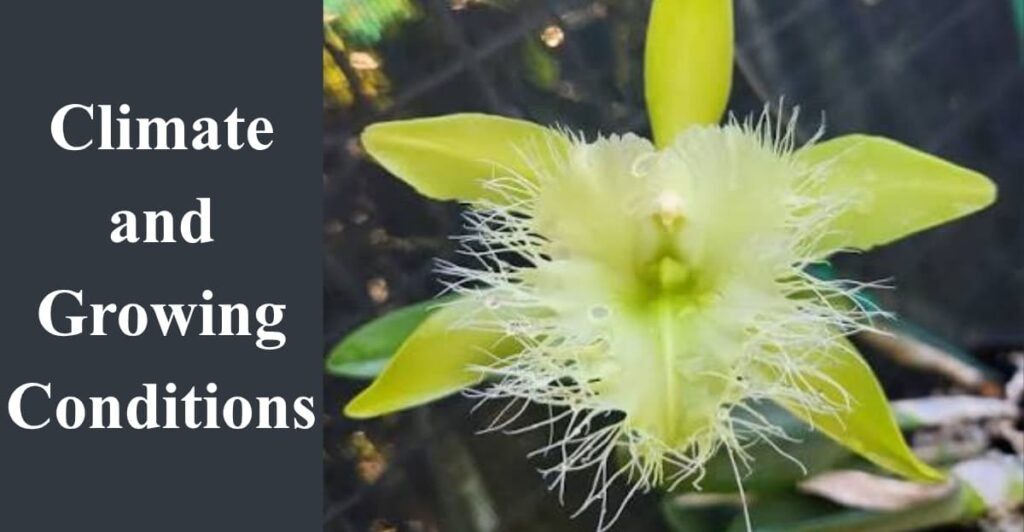
The Honduras national flower is adapted to a thermophilic environment, meaning it thrives in heat and naturally suits the warm coastal climates and lowland climates of Central America rather than cool mountain air. Whether growing in the wild or under greenhouse conditions, this orchid requires carefully balanced humidity, sunlight, temperature, and air circulation for healthy growth.
High Humidity: Around 80% humidity helps recreate the moist tropical air the orchid naturally experiences.
Bright Light: Strong light and filtered light are ideal, while direct afternoon sun can damage its waxy leaves and thick leaves.
Temperature: A daytime temperature of about 30°C and nighttime temperature near 18°C supports active growth.
Air Movement: Constant breezes and good air movement help with rot prevention, allowing the roots to dry after rain.
Dry-Wet Cycle: For cultivators in 2026, recreating the natural dry-wet cycle can encourage the orchid to produce its legendary blooms, including 7-inch-wide blooms, during the summer months.
This balance reflects the plant’s natural climate adaptation and explains why successful cultivation and greenhouse growing require careful control of humidity, sunlight, temperature, and airflow.
I find that reproducing the orchid’s natural warm conditions while maintaining steady air circulation is particularly important for encouraging strong growth and reliable flowering.
Physical Characteristics of Honduras National Flower
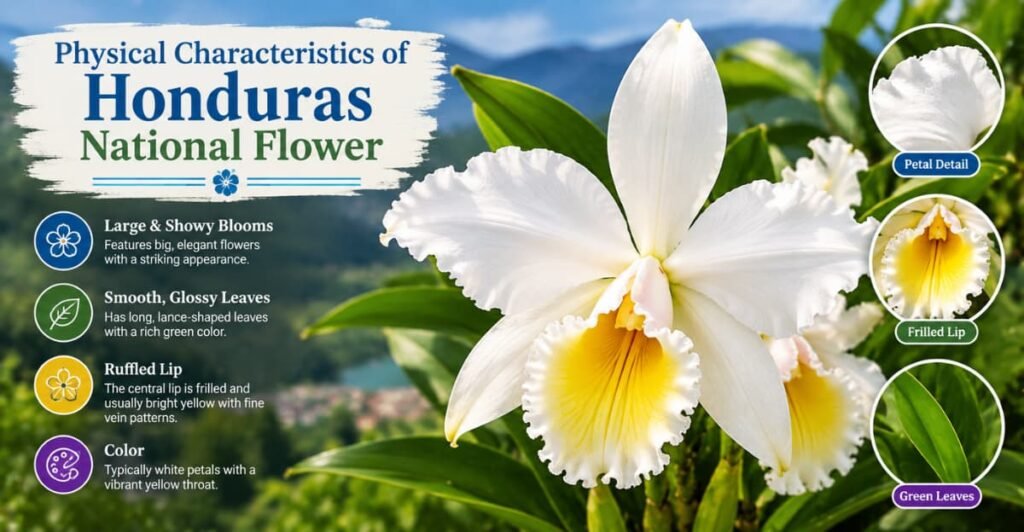
Rhyncholaelia digbyana is a medium-sized plant with stout pseudobulbs and compressed pseudobulbs, which are specialized stems responsible for water storage. Each pseudobulb typically produces a single leaf that is thick, leathery, and dull green, often displaying a silvery sheen or glaucous sheen, while the flower develops as an inflorescence with one or two massive blooms.
The most dramatic feature is its large labellum, with deeply incised, thread-like fringes that create a distinctive fringe characteristic of the genus and help attract pollinators, especially hawk moths, through its nighttime fragrance. Its long petals and narrow petals, together with the sepals, form a star-shaped backdrop around the central lip, creating a striking flower structure that reflects its specialized floral morphology, orchid anatomy, and orchid bloom. This structure supports pollination by nocturnal pollinators, while the pseudobulbs continue their important role in water storage.
I find the deeply fringed labellum particularly remarkable because it makes the orchid’s flower structure instantly recognizable and closely tied to its nighttime pollination strategy.
Colors and Appearance of the Honduran Orchid
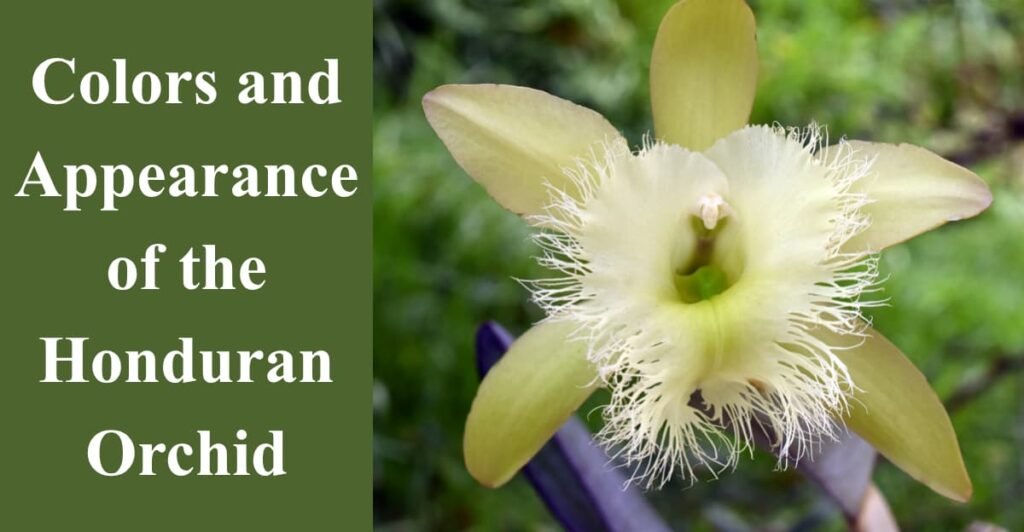
The Honduras national flower, or Honduran orchid, is admired for its subtle, elegant color palette and distinctive flower appearance. Its pale creamy-white to creamy white petals often display lime-green or chartreuse tones, while the throat develops an emerald-green and deeper green hue, creating a soft gradient that can look almost neon in bright light.
Petal Color: The petal color is mainly creamy white with delicate green undertones, giving the orchid a refined appearance.
Lip Shape: Its fringed, trumpet-like lip is one of the flower’s most recognizable features.
Floral Scent: A strong citrus aroma and lemon-like aroma develop mainly during its nocturnal period, adding to its distinctive floral scent.
Waxy Texture: The texture is waxy and substantial, creating a protective waxy texture that supports moisture retention.
Tropical Adaptation: This survival adaptation helps the flower withstand hot conditions and windy conditions in its lowland forest habitat.
Botanical Beauty: To the human eye, its luminous, ethereal quality has made it a favorite subject for botanical illustrations for more than a century.
Together, these characteristics define its botanical beauty, orchid coloration, and orchid texture, while its moisture retention supports survival in demanding tropical conditions.
I find the contrast between the creamy petals and green throat especially striking because it gives this orchid an appearance that feels both delicate and remarkably adapted to its environment.
Interesting Facts About Honduras National Flower
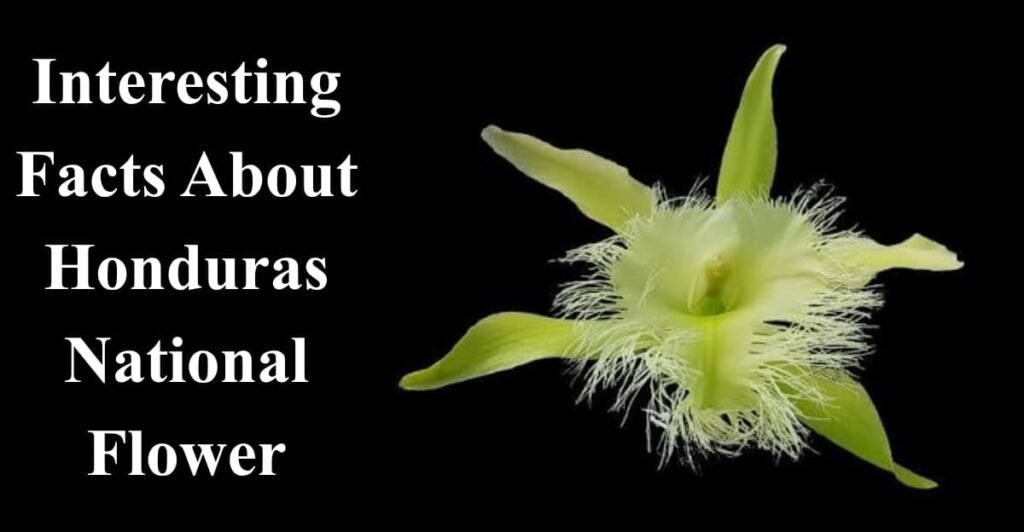
The Honduras national flower is an extraordinary orchid with several fascinating characteristics that distinguish it among the national symbols of the world. Its unusual night fragrance, hybridizing ability, and impressive longevity connect its history, biology, and importance in the commercial horticulture industry.
Night Fragrance: The orchid is almost scentless during the day but releases a powerful fragrance and refreshing lemon scent around sunset, attracting night-flying moths and supporting pollination.
Hybrid King: It is associated with Blc hybrids and Brassocattleya hybrids, contributing to the frilly lips characteristic of many commercial Cattleya orchids.
Longevity: Its individual blooms are relatively durable blooms and can remain attractive for several weeks when provided with suitable growing conditions.
Name History: In some local communities, it was historically known as the Orchid of the Virgin before its formal scientific naming.
Horticultural Importance: Its role in orchid hybrids, Cattleya breeding, and the broader horticulture industry adds to its commercial horticulture value.
These characteristics make the orchid a fascinating high-value entity for semantic search, connecting botanical history, history, biology, floral fragrance, moth pollinators, and the horticultural industry.
I find its nighttime fragrance particularly remarkable because the shift from nearly scentless daylight flowers to a strong evening aroma reveals a fascinating relationship between orchid biology and nocturnal pollinators.
Honduras National Flower vs Other National Flowers
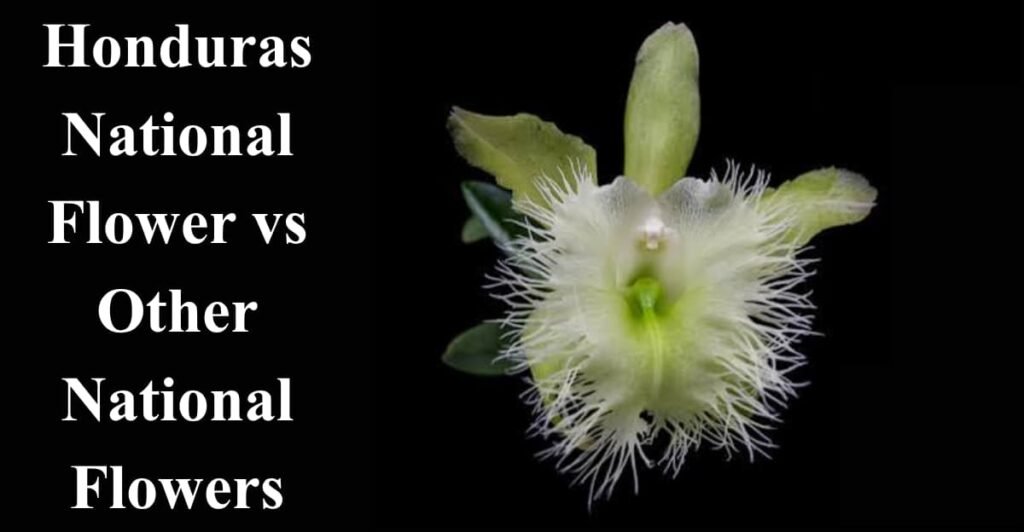
The Honduras national flower, Rhyncholaelia digbyana, stands out among the national flowers and floral symbols of the region because it is a highly specialized orchid with distinctive orchid morphology and a remarkable fringed lip. A comparison with neighboring countries highlights differences in botanical diversity, habitat, appearance, and cultural use.
Guatemala: The national flower is Lycaste skinneri var. alba, known as the White Nun Orchid. Both are orchids, but the White Nun prefers cool cloud forests, while the Honduran orchid favors warm lowlands.
Costa Rica: Its national flower is Guarianthe skinneri, or Guaria Morada, a purple orchid with a more traditional orchid shape compared with the distinctive fringed lip of the Honduran species.
El Salvador: The Flor de Izote, or Yucca flower, is a completely different plant that also has cultural importance through local cuisine.
This floral comparison shows how each country reflects its regional flora, from cloud forest orchids to lowland habitat specialists and the culinary plant traditions of neighboring nations. Because Rhyncholaelia digbyana is technically complex, visually unique, and closely associated with Honduras, it remains a distinctive national symbol among its neighbors.
I find this comparison especially useful because differences in habitat and flower structure make the Honduran orchid’s unique identity much easier to recognize.
Conservation Efforts to Protect Honduras National Flower
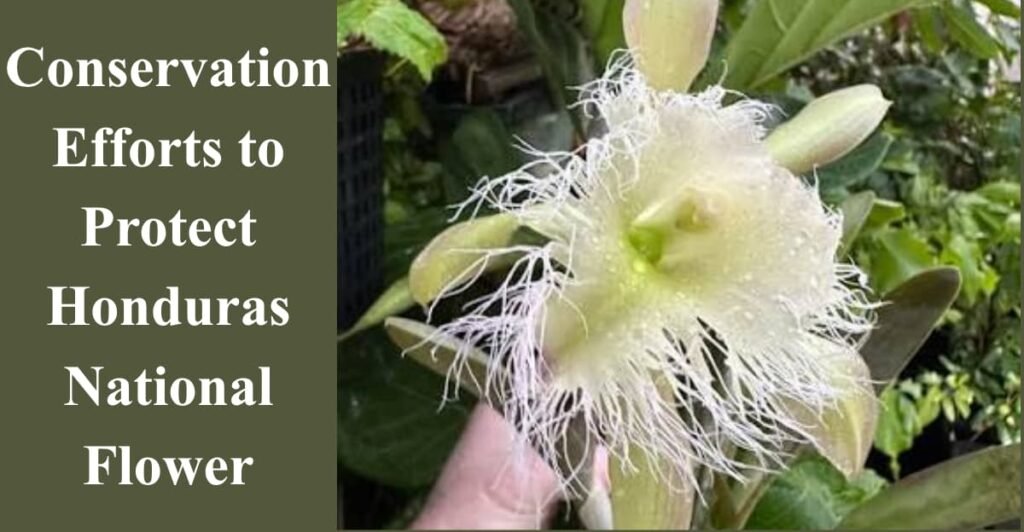
In 2026, conservation remains an important part of the Honduran environmental agenda because the Honduras national flower depends on a specific habitat that can be affected by environmental changes. Organizations such as the Honduran Orchidology Association and Lancetilla Botanical Garden support native populations through practical conservation strategies focused on habitat protection, orchid conservation, and long-term genetic preservation.
In-Situ Protection: Establishing protected areas within dry forests helps maintain the orchid’s natural growth and safeguard its protected habitat.
Seed Banking: Preserving seeds in climate-controlled environments helps maintain genetic diversity and supports future genetic preservation efforts.
Community Education: Teaching local populations about the value of the flower can discourage illegal poaching from the wild and strengthen public awareness.
Botanical Conservation: A botanical garden can provide controlled conditions for research, propagation, and protection of native flora and orchid populations.
These measures help preserve the biodiversity of Honduras while ensuring that the Queen of Orchids remains part of the national landscape rather than existing only as a national symbol. Strong environmental conservation, habitat protection, and community participation are essential for maintaining healthy orchid populations.
I consider habitat preservation especially important because protecting the orchid where it naturally grows offers a more sustainable solution than relying solely on cultivated specimens.
Threats to Honduras National Flower
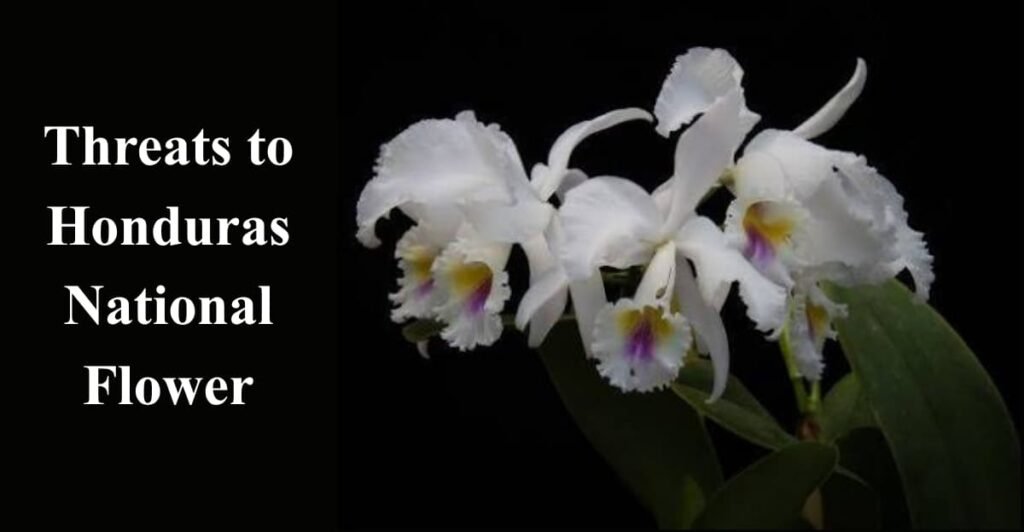
Although the Honduras national flower has protected status, several serious threats can affect its survival, particularly habitat loss caused by agricultural expansion, urban development, and forest clearing. As forests are converted for cattle ranching and coffee plantations, the specific trees that support the orchid may disappear, contributing to habitat destruction, declining biodiversity, and broader environmental threats.
Illegal Trade: Popularity among collectors can lead to the illegal harvesting of wild specimens for the international market, putting natural populations at risk.
Climate Change: Rising temperatures and shifting rainfall patterns can disturb the orchid’s delicate dry-wet cycle, affecting blooming and long-term survival.
Pests and Disease: Non-native scale insects and fungi may damage local populations, especially when pests enter through imported plants.
Plant Trade: Unregulated plant trade can spread invasive pests and increase pressure on wild orchid populations.
Addressing these climate impacts and other threats requires a multi-national effort involving Honduran scientists and global environmental agencies to strengthen orchid conservation and create a sustainable future for the species.
I find habitat protection particularly important because conserving the trees that support this orchid addresses one of the most fundamental causes of its environmental vulnerability.
How Honduras Celebrates Its National Flower
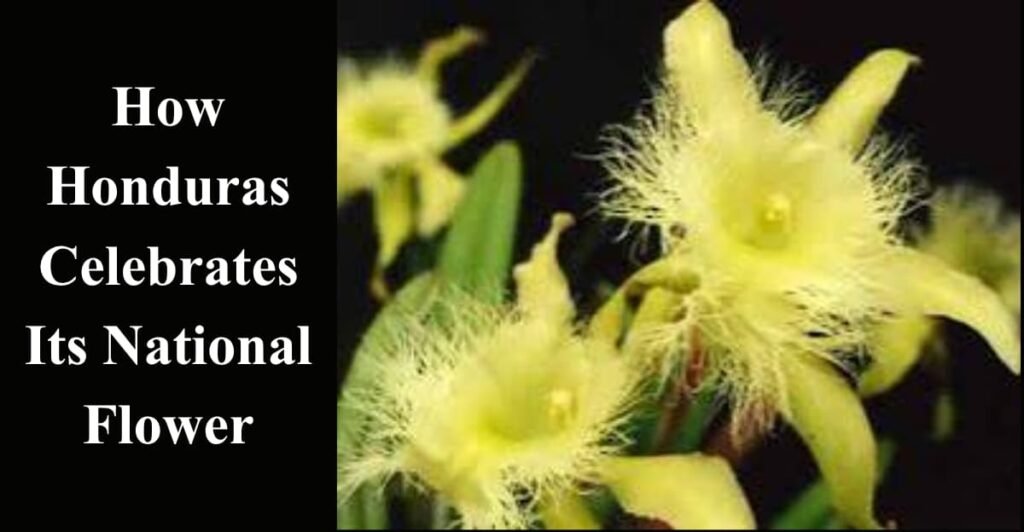
The national pride surrounding the orchid is expressed throughout the year, especially during National Flower Day and events connected with the decree anniversary in November. Schools, botanical gardens, and public exhibitions celebrate Rhyncholaelia digbyana alongside other native species, highlighting its beauty, natural heritage, botanical heritage, and importance to the country’s cultural heritage.
National Currency: The Lempira incorporates botanical motifs, helping keep the national flower visible as part of Honduras’s identity.
Postage Stamps: Special postage stamps and beautifully engraved series may feature the orchid and its natural habitat.
Government Logos: Environmental departments and agricultural departments may incorporate an orchid silhouette into their branding and government branding.
Public Celebrations: These celebrations encourage citizens of Honduras to appreciate the flower as a living flower, national symbol, and reminder of orchid conservation.
Environmental Awareness: Public activities connect the orchid with protection, native flora, environmental awareness, and Honduras’s environmental future.
Through this patriotic celebration, the orchid becomes more than a decorative emblem; it connects national history with conservation and appreciation of the country’s natural resources. Its presence in public culture continues to reinforce the importance of preserving Honduras’s botanical identity for future generations.
I find these forms of recognition especially effective because placing a national flower in schools, art, currency, and public spaces keeps its ecological and cultural significance visible to everyday citizens.
Conclusion
The Honduras national flower, Rhyncholaelia digbyana, is an elegant orchid that represents. Honduras through its unique beauty, rich biodiversity, cultural heritage, and natural identity. From its tropical habitat and distinctive fragrance to its conservation importance, this national symbol reflects the remarkable botanical heritage of the country.
Frequently Asked Questions
1. What is the national flower of Honduras?
The national flower of Honduras is Rhyncholaelia digbyana, an elegant epiphytic orchid with distinctive fringed lips and fragrant blooms.
2. What is the scientific name of the Honduras national flower?
Its scientific name is Rhyncholaelia digbyana, belonging to the Rhyncholaelia genus and Orchidaceae family.
3. When did Honduras adopt its national orchid?
Honduras officially designated Rhyncholaelia digbyana as its national flower on November 26, 1969.
4. Why was the orchid chosen as Honduras’s national flower?
The orchid was chosen because it is native to the region and better represents Honduras’s natural environment, biodiversity, and botanical heritage than the previously used rose.
Please Write Your Comments