15 Weird Flowers That Look Unreal (And Where They Grow)
Updated: September 14, 2026
28
Discover 15 weird flowers that look unreal, from bizarre shapes and vibrant colors to extraordinary blooms that seem to belong on a different planet. These rare plants showcase nature’s endless creativity, fascinating adaptations, and surprising pollination strategies across diverse ecosystems. Keep reading to explore their unique beauty, where they grow, and the remarkable features that make these flowers truly unforgettable.
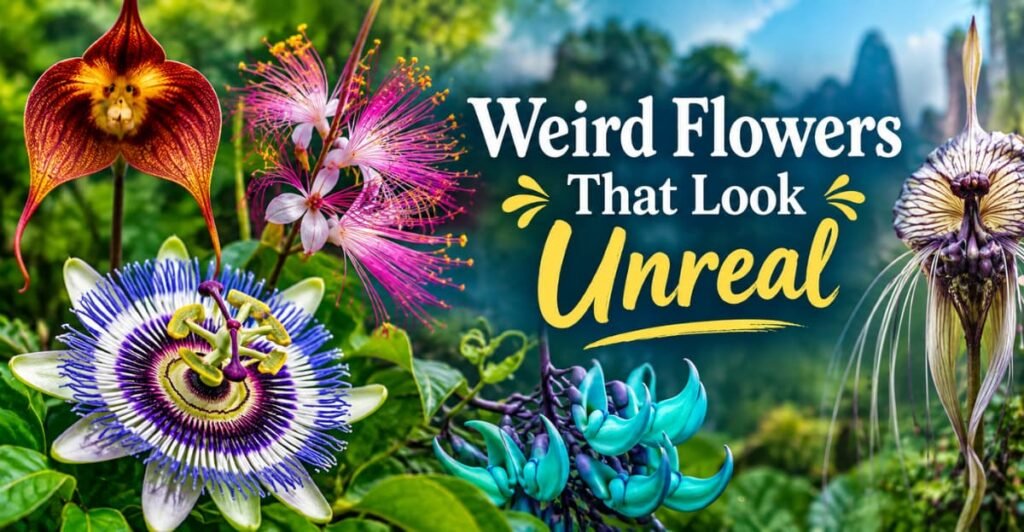
Table of Contents
What Are Weird Flowers
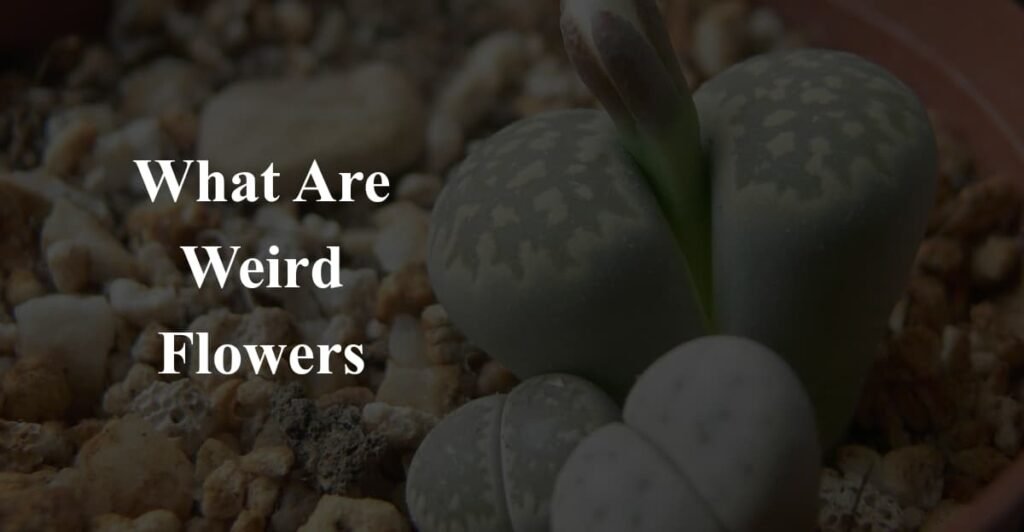
Weird flowers are angiosperms with unusual radial symmetry or bilateral symmetry, atypical phenotypes, and distinctive physical characteristics that set them apart from common garden varieties. In systematic botany, their specialized adaptation, plant morphology, and botanical characteristics reveal remarkable structural adaptations and evolutionary development.
From flowers resembling a primate or decaying carcass to those growing underground, these rare plants use structural complexity, chemical signaling, and environmental adaptation as a survival mechanism within specialized environmental niches. Modern genomic sequencing and genomic research further explain their weirdness, flower traits, scent, decay, carcass-like forms, biodiversity, botany, and evolutionary survival.
I find that studying these unusual flowers makes their strange forms feel less mysterious once their biology, adaptation, and evolution are understood.
Why Do Some Flowers Look So Unusual
Unusual floral morphology often develops through pollination needs, as pollinators such as bees, birds, bats, and flies drive co-evolution between flowers and their animal partners. A specific flower shape, anatomy, or long tubular shape may match a hummingbird and its matching beak, creating a highly effective specialized pollination system within an ecosystem.
Beyond pollination, environmental stressors such as extreme heat, limited soil nutrients, high altitude, and nutrient deficiency create evolutionary pressure that encourages protective adaptations. Succulent tissues, reflective surfaces, trapping mechanisms, water storage, and other protective structures help plants survive changing environmental conditions, while natural selection, ecological competition, and evolution produce the exotic varieties and weird flowers that challenge traditional ideas of floral beauty. A flower’s unusual form can therefore function as a biological messenger, using reflective adaptations, trapping structures, and specialized pollination strategy to improve survival.
In my experience observing unusual plants, their strange appearance usually becomes easier to understand when viewed through adaptation, evolution, and their specific environment.
The Strangest Flowers Found Around the World
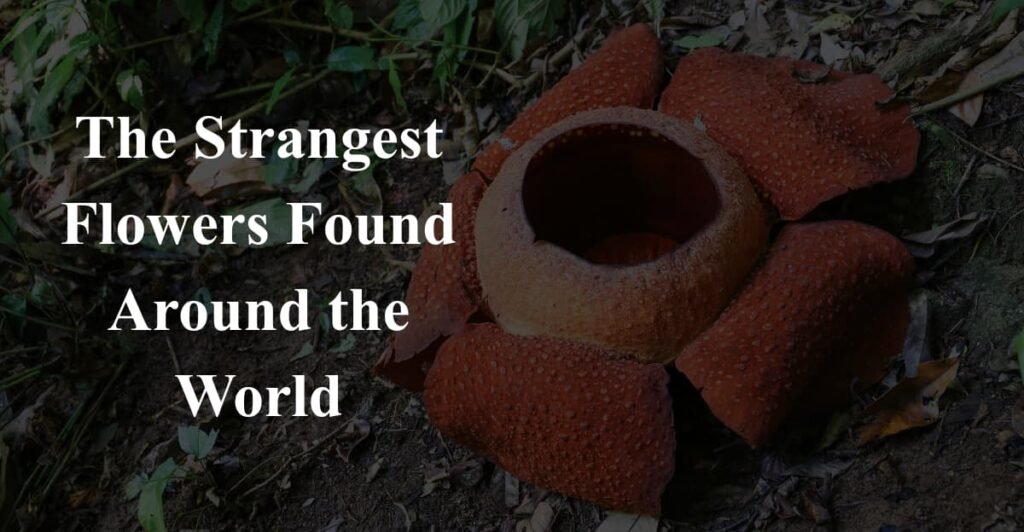
Across diverse geographic regions, botanical oddities thrive in specialized microclimates. The Corpse Lily (Rafflesia arnoldii) grows in Southeast Asia as a parasitic plant without leaves or stems, while Vegetable Sheep (Raoulia eximia) forms dense cushions on New Zealand mountainsides, showing remarkable cold tolerance in sub-zero temperatures.
The Pelcan Flower (Aristolochia grandiflora) has a massive, heart-shaped bloom, long tail, and bird’s plumage-like pattern that helps with fly pollination. These endemic species demonstrate remarkable adaptation, floral structure, habitat specialization, and geographic diversity.
I find that seeing these flowers in context makes their unusual adaptation and botanical beauty much easier to understand.
Weird Flowers With Animal-Like Shapes
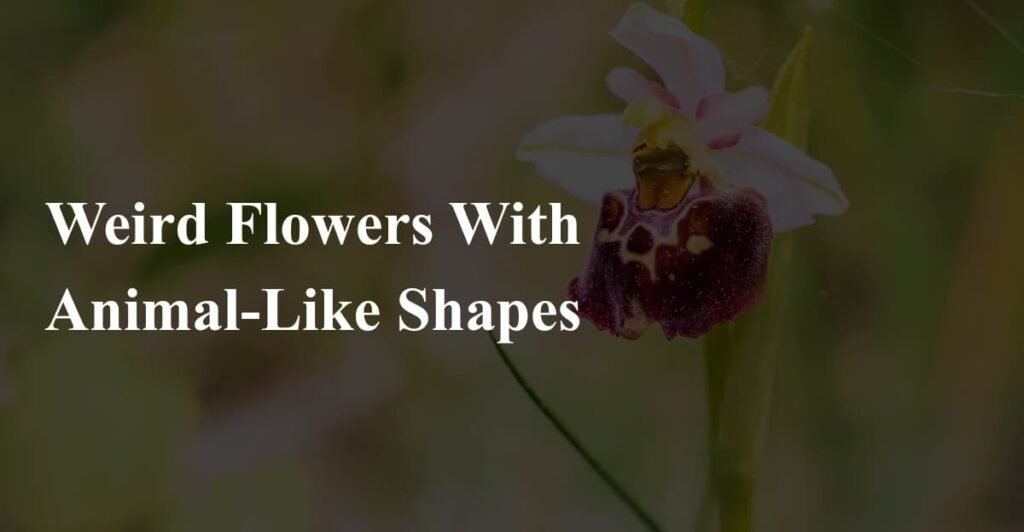
Floral mimicry is one of nature’s most fascinating tricks, with plants evolving animal-like shapes through zoomorphism to attract pollinators. This combination of mimicry, deceptive pollination, and protective camouflage demonstrates how evolution can shape flowers for survival and reproduction.
The Flying Duck Orchid (Caleana major)
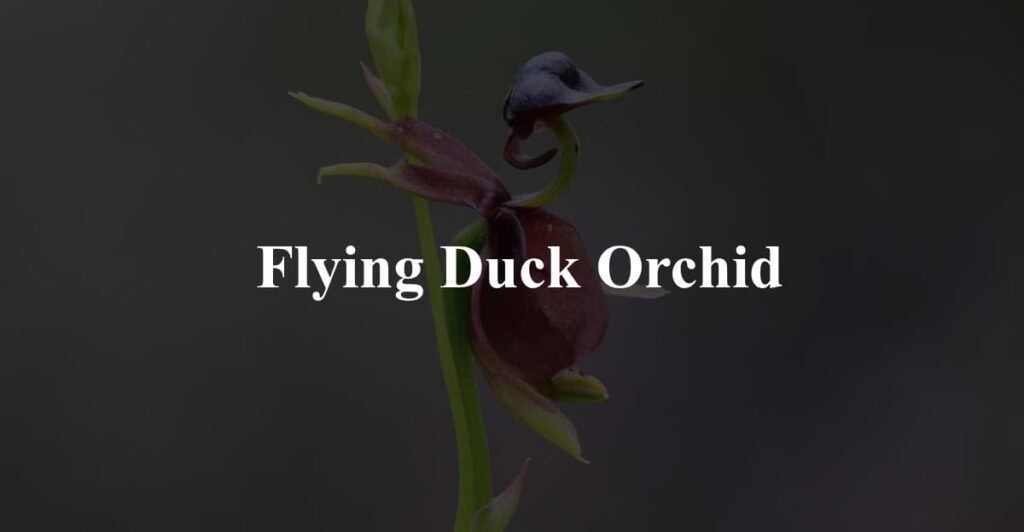
The Flying Duck Orchid (Caleana major) grows in the eucalyptus forests of Australia, where its orchid flowers resemble a duck in mid-flight. This structural adaptation is more than aesthetics: when a male sawfly lands on the flower, its head snaps shut, trapping the insect against the pollen sacs before releasing it toward the next flower, supporting pollen transfer, pollination, floral adaptation, and specialized insect behavior.
The Bumblebee Orchid (Ophrys bombyliflora)
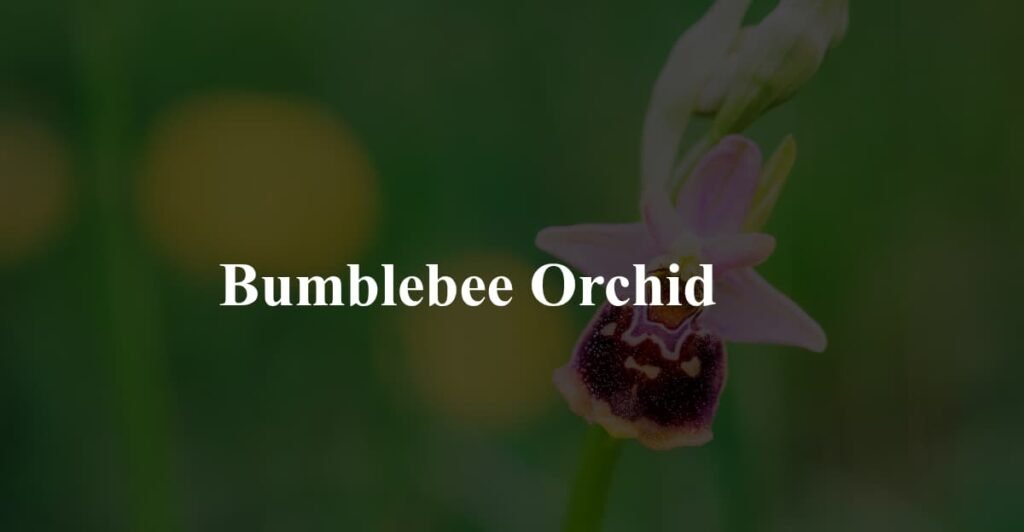
The Bumblebee Orchid (Ophrys bombyliflora) uses biological deception by resembling a female bumblebee while producing volatile organic compounds, or scents, that mimic insect pheromones. This triggers pseudocopulation, as the male bee attempts to mate with the flower, allowing pollinia to attach and enabling pollen transfer through this remarkable chemical mimicry and reproductive strategy involving specialized pollinators and a precise pollination mechanism.
Creepy and Spooky Looking Flowers
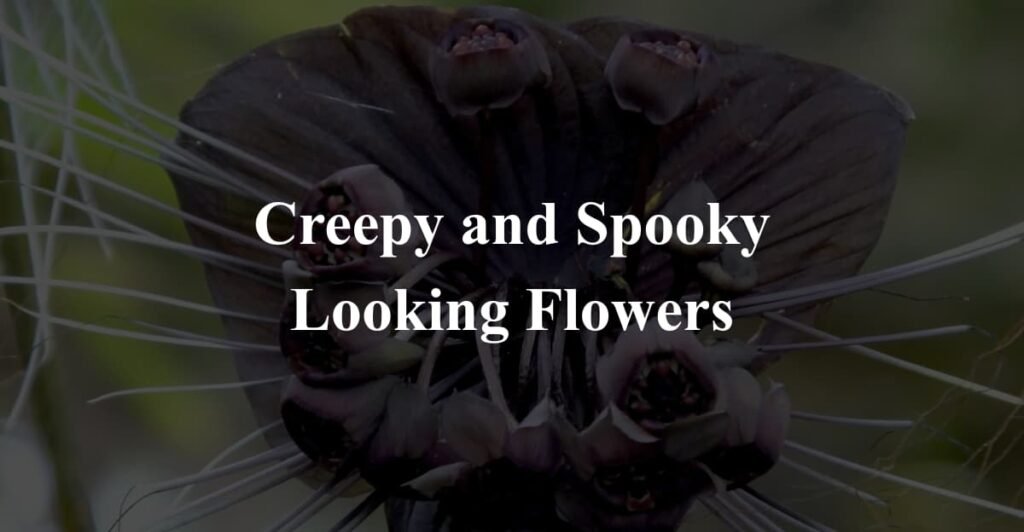
Macabre blooms often thrive in shaded, damp habitats, using a creepy appearance that can resemble skeletal remains or gothic art. The Black Bat Flower (Tacca chantrieri) has deep purple-black petals, whisker-like bracts reaching 12 inches, and a bat-like form that seems to emerge from the shadows.
The Doll’s Eye (Actaea pachypoda) produces white berries marked with a black dot, creating the appearance of staring eyeballs. These striking features act as a warning to herbivores, while toxic alkaloids support plant defense and make these toxic plants fascinating examples of floral adaptation.
I find these flowers especially intriguing because their spooky appearance combines visual drama with practical plant defense.
Weird Flowers That Smell Terrible
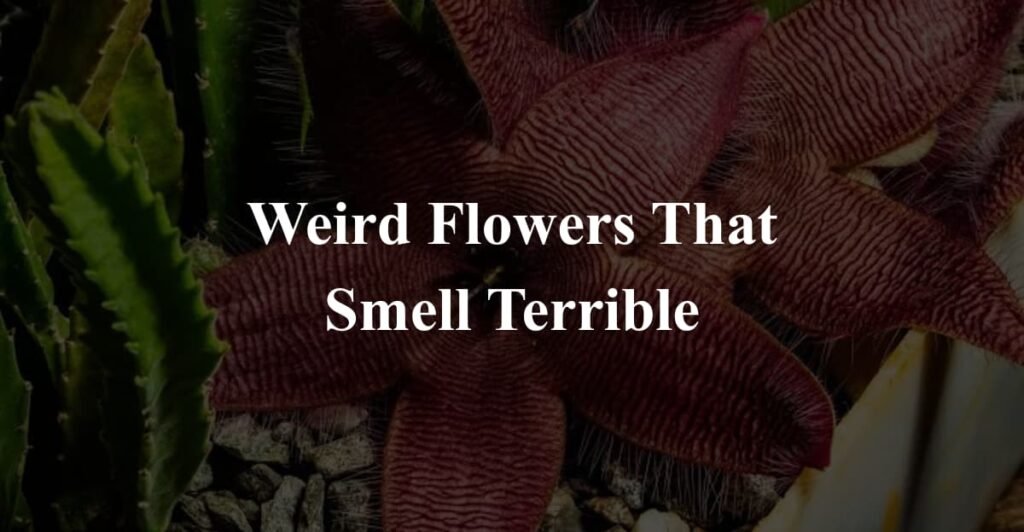
Some extraordinary blooms produce powerful odors instead of sweet perfumes, releasing scents that can resemble rotting meat, a wet dog, or old socks. This unusual strategy, called sapromyophily, helps attract carrion-feeding insects and other pollinators by imitating the smell of decaying organic matter.
Titan Arum: The Titan Arum (Amorphophallus titanum) is native to Sumatra and produces a Rotting Flesh scent that attracts beetle pollinators.
Dead Horse Arum: Dead Horse Arum (Helicodiceros muscivorus) grows in the Mediterranean and produces a Decaying Carcass odor to attract insects.
Starfish Flower: The Starfish Flower (Stapelia gigantea) from South Africa releases a Foul Garbage scent that mimics carrion and attracts flies and other insects.
How Titan Arum Spreads Its Odor: Through thermogenesis, the flower generates heat around its central spike, helping vaporize its foul odor so the scent can travel through the dense rainforest canopy.
Why the Smell Matters: These flowers use odor, carrion mimicry, and specialized pollination strategies to attract insects that would otherwise have little interest in ordinary flowers.
Rare Weird Flowers You’ve Probably Never Seen
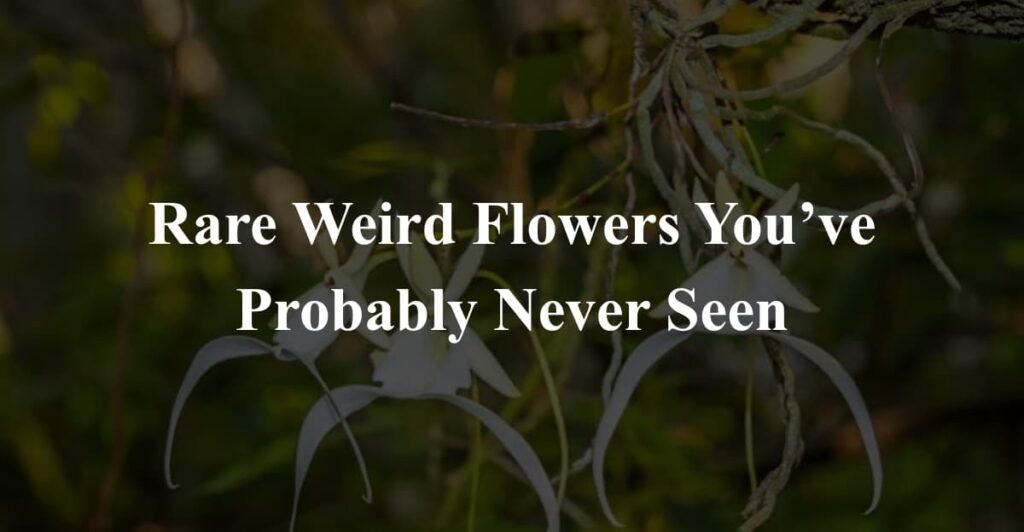
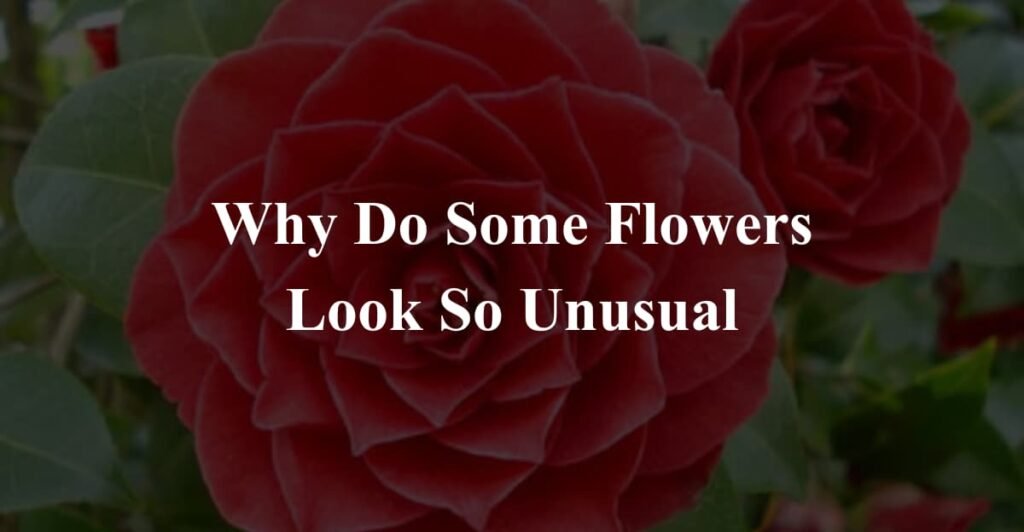
The Ghost Orchid (Dendrophylax lindenii) is a leafless epiphyte with photosynthetic roots wrapped around trees in Florida and Cuba, appearing to float in the air despite lacking chlorophyll in its main body. The Middlemist Red, a rare camellia variety, has only a few known specimens in a New Zealand garden and a UK greenhouse, highlighting biodiversity loss and the need for conservation efforts.
These rare flowers are fascinating examples of botanical rarity, from an orchid surviving through roots and photosynthesis to a flowering plant preserved through plant conservation. Their specialized habitat, climate, and growth in the wild, greenhouse, or garden show the importance of protecting unusual plant diversity.
I find the Ghost Orchid especially fascinating because its unusual epiphyte structure makes its survival strategy feel almost unreal.
Exotic Weird Flowers From Tropical Rainforests
Tropical biomes provide a high-humidity environment where exotic varieties adapt to high-competition environments. The Pitcher Plant (Nepenthes) is a carnivorous species with modified leaves forming deep vessels containing digestive enzymes, creating botanical traps that capture insects and even small rodents in nitrogen-poor soil.
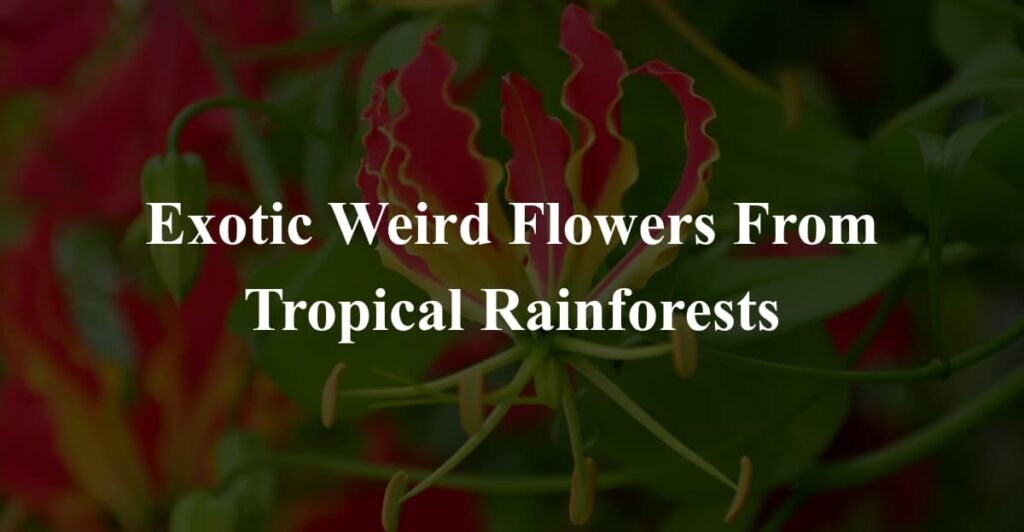
The Flame Lily (Gloriosa superba) grows through dense jungles, using tendrils at its leaf tips to reach sunlight. Its reflexed petals resemble flickering tongues of fire, creating a visual signal that attracts butterflies, while demonstrating plant adaptation in a rainforest habitat.
In my experience, tropical carnivorous plants are among the most impressive examples of how unusual structures develop to overcome nutrient-poor soil.
Weird Flowers That Look Like Human Faces
Pareidolia explains why some plants and flowers appear to have human faces. The Monkey Face Orchid (Dracula simia) uses its petals and columns to create a grinning primate appearance in the cloud forests of Ecuador and Peru, adding to its peculiar charm with a scent like ripe oranges.
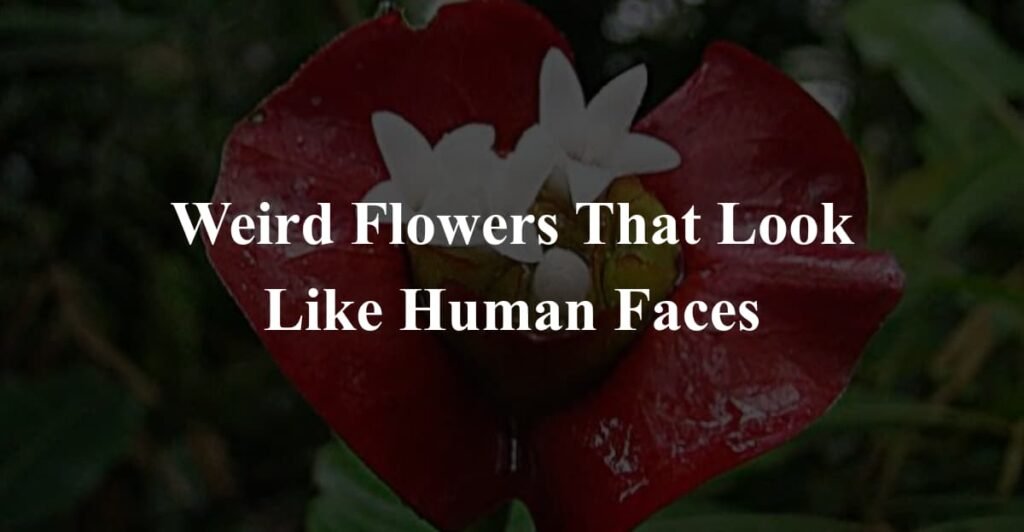
The Hooker’s Lips (Palicourea elata) is another striking human lookalike, with bright red bracts resembling luscious, waxed lips. This morphological trait acts as a visual beacon for hummingbirds, while floral mimicry, facial resemblance, plant morphology, and hummingbird pollination support its role among specialized pollinators.
I find facial resemblance in flowers especially fascinating because it shows how naturally plant morphology can create surprisingly familiar forms.
Unusual Flowers With Unique Colors and Patterns
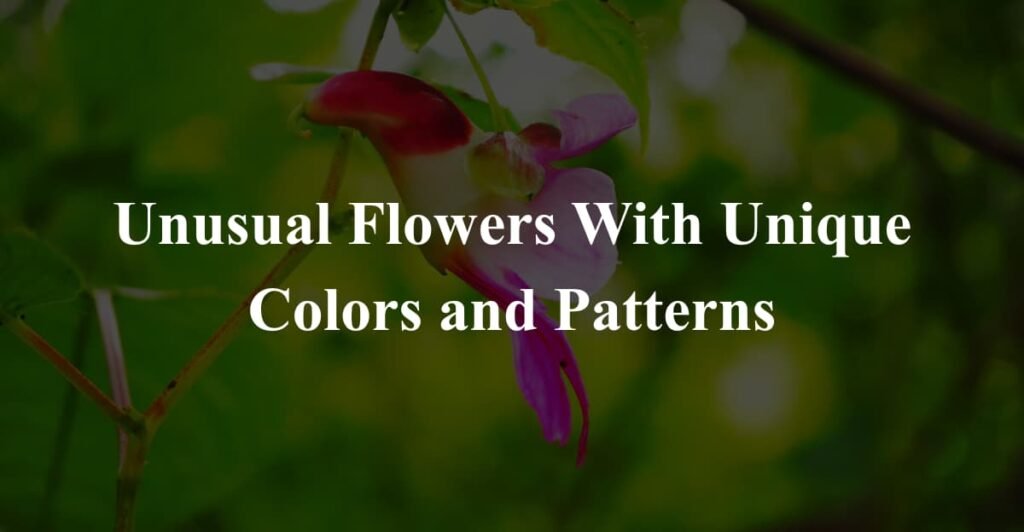
Weird flowers use iridescence, geometric patterns, and color as forms of communication in the plant world. The Jade Vine (Strongylodon macrobotrys) produces luminous, mint-green, claw-shaped flowers that are pollinated by bats at night, making this rare color especially remarkable in the botanical world.
The Parrot Flower (Impatiens psittacina) uses complex pigmentation to create a 3D effect resembling a parrot in flight. Its vibrant colors, distinctive blooms, and specific anthocyanin levels produce color patterns suited to the visual spectrum of its target pollinator, demonstrating plant pigmentation, floral coloration, pollination signals, and botanical diversity.
In my experience, unusual iridescent flowers are most impressive when their color patterns are viewed as functional pollination signals rather than decoration alone.
Weird Flowers That Only Bloom Once in Years
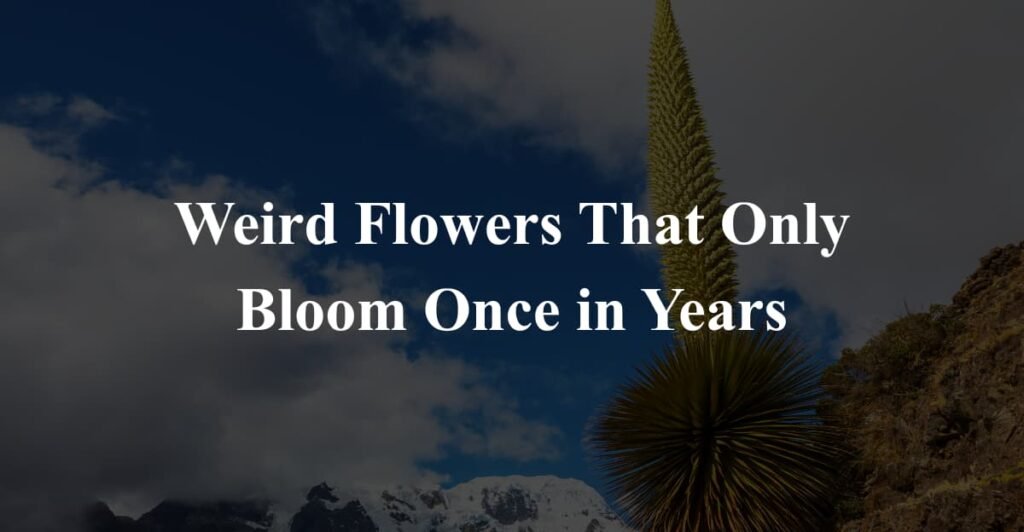
The Puya raimondii, known as the Queen of the Andes, can live for 80 to 100 years before blooming once, dying, and completing its monocarpic life cycle. This remarkable reproductive strategy produces a massive spike up to 30 feet tall with thousands of individual flowers, while the Century Plant (Agave americana) spends decades storing energy in succulent leaves before producing a flowering stalk.
These slow-growth cycles demonstrate extraordinary resilience and patience in the natural world, while rare flowering, reproduction, plant longevity, and the flowering cycle reveal how unusual plants invest years in a single reproductive event.
I find these plants fascinating because their extreme plant longevity shows how differently nature can approach growth and reproduction.
Can You Grow Weird Flowers at Home
Yes, many weird flowers and unusual plants can be grown at home if their natural habitat requirements are recreated carefully. Modern indoor gardening technology in 2026 makes it easier to control light, humidity, temperature, watering, airflow, and growing media, allowing unconventional flora to adapt successfully to indoor spaces. However, each plant has different needs, so understanding its native environment is essential before cultivation.
For Beginners: Start with Living Stones (Lithops), which resemble pebbles and require very little water. Place them on sunny windowsills, use fast-draining soil, and avoid frequent watering.
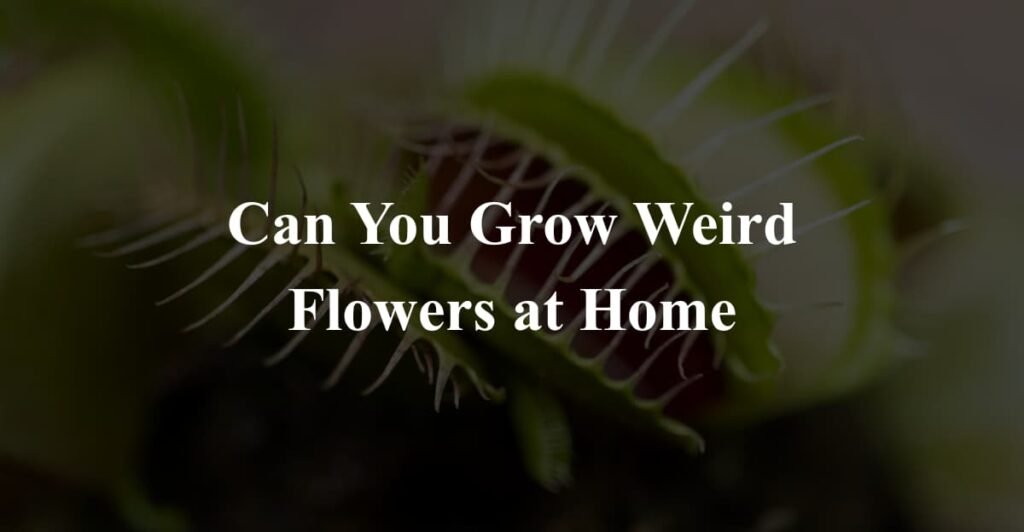
For Enthusiasts: Try Venus Flytraps and Sundews for an introduction to carnivorous botany. They need distilled water, high light, good drainage, and nutrient-poor growing media.
For Experts: Grow Orchids from the Dracula genus, which can require humidity controllers, good airflow, and noticeable temperature drops at night.
Provide Proper Care: Choose suitable containers, maintain drainage, monitor humidity and temperature, provide adequate light, and adjust watering according to seasonal growth.
Protect Unusual Plants: Research each plant’s native climate, avoid overwatering, watch for stress, and maintain suitable airflow to encourage healthy adaptation.
Growing these unique specimens in our living rooms can support biodiversity and preservation while revealing the hidden wonders of the natural world, planet, and evolution.
In my experience, successful plant care becomes much easier when indoor conditions closely imitate the plant’s natural habitat.
Conclusion
From animal-like shapes and creepy appearances to foul scents, rare habitats, and unusual colors, these weird flowers reveal the incredible creativity of evolution. Exploring their adaptations, pollination strategies, and unique growing environments shows why these extraordinary plants look almost unreal. Keep discovering these botanical wonders to appreciate the remarkable diversity and survival strategies found throughout the natural world.
Frequently Asked Questions
1. What are weird flowers?
Weird flowers are unusual flowering plants with distinctive shapes, structures, colors, scents, or adaptations that differ from common garden flowers.
2. Why do some flowers look like animals?
Some flowers develop animal-like appearances through floral mimicry and zoomorphism, helping attract specific pollinators or support reproduction.
3. What is the strangest flower in the world?
The Corpse Lily (Rafflesia arnoldii) is among the most unusual, producing an enormous flower while living as a parasitic plant without leaves or stems.
4. Which flower smells like rotting meat?
The Titan Arum (Amorphophallus titanum) produces a rotting flesh scent that attracts beetle pollinators, while other unusual flowers imitate decaying carcasses or foul garbage.
Please Write Your Comments